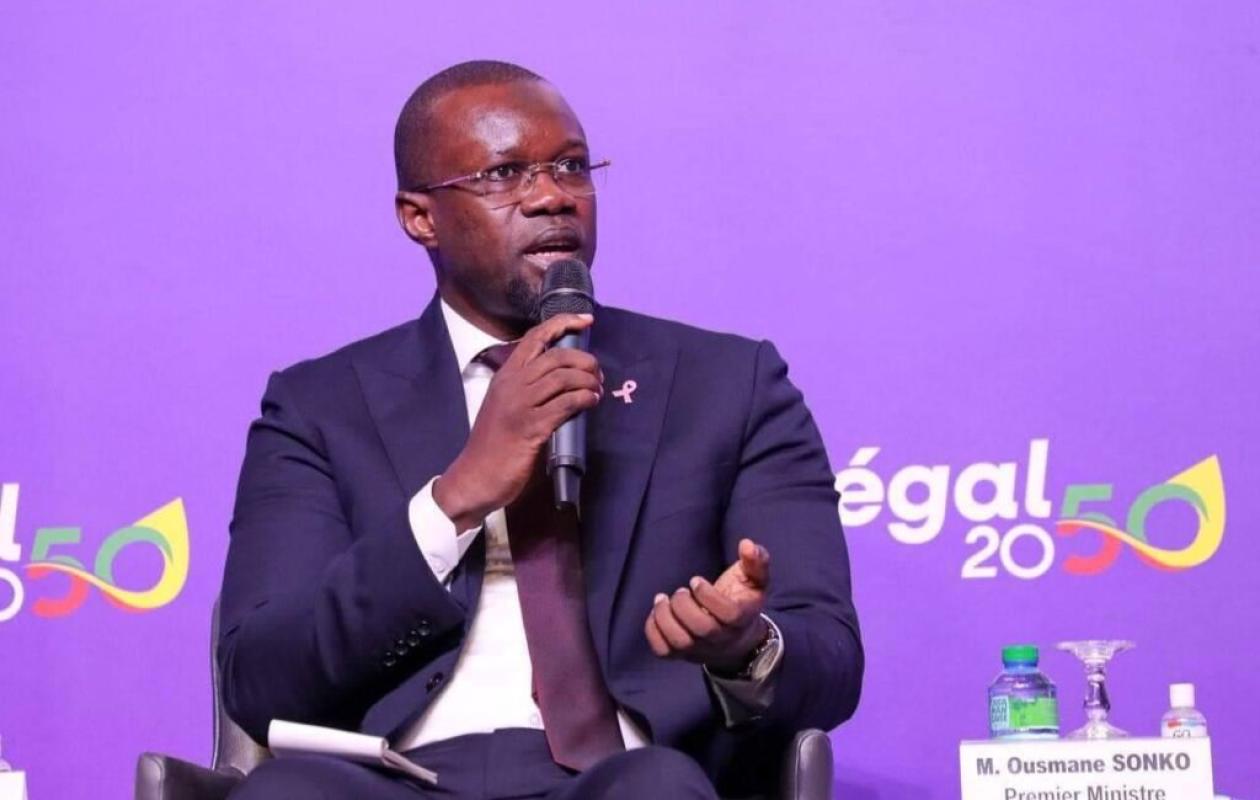
Agenda Sénégal 2050 : Le Bilan à chaud des acteurs politiques et de la société civile (2/2)
On October 14, 2024, Prime Minister Ousmane Sonko presented the national transformation framework "Agenda Senegal 2050" commonly known as the "Project". A year later, political actors are drawing up an initial assessment of this societal project which aims to be visionary, participatory and resolutely focused on national sovereignty.
Designed as a long-term compass, this Senegal 2050 Agenda charts the country's trajectory over a quarter of a century, centered around a triptych: prosperity, sovereignty, and justice. For Aldiouma Sow, Minister Counselor, the assessment of this first year is "generally positive." "We are still in the implementation phase, but the foundations are solid. Structural reforms are underway, and the first results are beginning to be felt," emphasizes the coordinator of the political, civil society, and unions division in the head of state's office.
The opposition, however, is much more critical. Abdoulaye Wilane, spokesperson for the Socialist Party, considers the government's assessment "disconnected from the realities on the ground." For the former single party that dominated Senegalese politics from 1960 to 2000, Agenda 2050 is an attractive framework on paper. Mr. Wilane points out, however, that "resources are lacking, governance remains centralized, and economic priorities are unclear." The president of the Kaffrine Departmental Council believes the country suffers from a lack of economic direction and an excessive dependence on external debt. "Donors are observing a certain caution, the local private sector is weakened, and growth remains unequal. We have not yet seen the promised break," laments the former Socialist deputy and mayor of Kaffrine. While he acknowledges efforts at transparency, he warns against the political instrumentalization of the fight against corruption. "We must prevent this battle from turning into a selective hunt. The rule of law cannot be built on fear or suspicion," urges Mr. Wilane.
Aldiouma Sow: "Concrete results"
On the other hand, Aldiouma Sow, Pastef's municipal coordinator in Somone, notes that the four strategic axes of the 2050 Agenda, namely Competitive Economy and Job Creation - Governance and Pan-African Engagement - Human Capital and Social Justice - Regional Planning and Sustainable Development, have all had promising beginnings. "We have achieved concrete results, particularly in mobilizing investments. The Invest in Senegal Forum has enabled us to record more than 13,000 billion CFA francs in commitments. This is proof that confidence has returned," he emphasizes.
Demba Seydi: "Moving from principles to practices"
On the civil society side, the tone is more nuanced. While the reforms undertaken are welcomed, their actual scope is debated. Demba Seydi, program director at the African Center for Justice, Governance and Transformation (CAJUST), believes that Senegal 2050 has the merit of setting a clear vision, but that the transition to action remains tentative. "We are seeing progress on the texts and the rhetoric, but the transformation must be observed in the daily lives of citizens. The challenge today is to move from principles to practices," says Mr. Seydi, who is also an expert in natural resource governance.
Echoing this, Babacar Ba, president of the Forum du liticiable, laments the lack of visible impact of the 2050 Agenda on employment and purchasing power. While Aldiouma Sow notes "a two-point drop in the unemployment rate, which stands at 20%," Mr. Ba insists: "Unemployment remains high, especially among young people. The 2050 Agenda must provide concrete answers to social expectations, not just economic ones."
On the institutional level, Pastef's Aldiouma Sow emphasizes the legislative and regulatory reforms undertaken to establish good governance: the law on access to information, reform of the general tax code, supervision of whistleblowers, asset declaration requirements, and revision of the public procurement code. "For the first time, the governance of public resources is becoming a central pillar of national policy. We want an exemplary state and a more transparent administration," explains Mr. Sow. However, he acknowledges that mobilizing financial resources remains a major challenge: "We are inheriting a restrictive budgetary situation. The objective is to broaden the tax base without stifling the economy, and to strengthen endogenous financing."
Indeed, the laws on access to information and asset declarations are important steps, Babacar Ba acknowledges. But, the lawyer argues, we must go beyond the texts and ensure their effective implementation. He particularly denounces the maintenance of "slush funds" and the exclusion of certain institutions such as the Caisse des Dépôts et Consignations from the public procurement code, which he considers to be obstacles to good governance. "As long as there are pockets of opacity, corruption will remain a structural risk. Citizen trust will depend on how the State manages these gray areas," he says.
Pastef declines progress, doubts from the opposition and civil society persist
According to Demba Seydi, the success of the framework will depend on the coherence between sectoral policies. "A reform of the tax code, for example, cannot be considered independently of the mining code or the constitutional framework. Agenda 2050 must avoid the compartmentalization of public policies," believes Mr. Seydi, former leader of Convergence socialiste.
He also calls for greater ownership by civil society and local communities. "Non-state actors must be involved in the governance of implementation. Monitoring cannot be solely administrative; it must be participatory," he said.
Real economy
On the economic front, Demba Seydi also advocates for a return to the real economy. "To achieve sovereignty, we must invest more in productive sectors: agriculture, fishing, livestock, and crafts. It is by developing our local resources that Senegal will achieve its prosperity goals," he professes. Indeed, the Minister Counselor reveals that the Agriculture and Energy sectors will be among the priorities to accelerate the implementation of the "Project." "We have chosen to intervene in the economic sectors that occupy the Senegalese. And the first of these sectors is agriculture. Therefore, there has been a lot of investment and financing focused on agriculture, and we have seen the positive effects. But another sector that is also extremely important for the economy and a priority for the government is energy," said Aldiouma Sow.
One year after its presentation, the Senegal 2050 National Transformation Framework is raising hopes, doubts, and vigilance. The legal and institutional foundations have been laid, and reforms have begun, but their social appropriation and practical implementation remain to be further developed. The stakeholders interviewed agree on one point: the success of Senegal 2050 will depend on coherence, transparency, and consistency in public action. "The future of this project depends on the state's ability to listen, involve, and be accountable. It is on this condition that the framework will cease to be a mere horizon and become a true driver of transformation," asserts Demba Seydi.
















Commentaires (24)
Pour l'agenda 20250, il y aura des resultat concret d'ici 2028. Les Senegalais ont confiance thus the 450 milliards of Disapora Bonds.
Incapable
y croit qui veut bien croire ca n‘engage que lui
KARIM GUEYE KRUM KHATHIE
BADARA GADIAGA SANS BFEM
FOFANA JE DEMANDE PARDON
MOUSTAPHA DIAKHATÉ LE VIEILLARD INSULTEUR.
ASSANE DIOUF SAGAKATT
ALIOUNE TINE FUMIER EN CHEF ET HORDE
Toute cette racaille tympanise les paisibles citoyens Senegalais sur des sujets qu elle ne maîtrise pas.
Ces mercenaires sans emplois perfusés avec l argent volé sont même prêts à aller en prison pour des phacochère tapis dans l ombre.
Peine perdue
Inshallah cette nation va avancer avec ou sans
On veut bosser.
Bro on nous avait que dans 3 mois on allait vivre différemment.
C'est toujours pas le cas.
On a perdu Tout à Touba à cause des inondations.
Je me questionne pour es pluies de 2026.
Karim krum khathie
Moustapha Diakhaté
Bachir FOFANA
Diallo de Tivaone
Nguer
Doudou kouloubaly
Boy ton.
Etc....
Quelle honte pour notre pays.
Participer à la Discussion