Derrière la salle d’accouchement : La souffrance silencieuse des pères
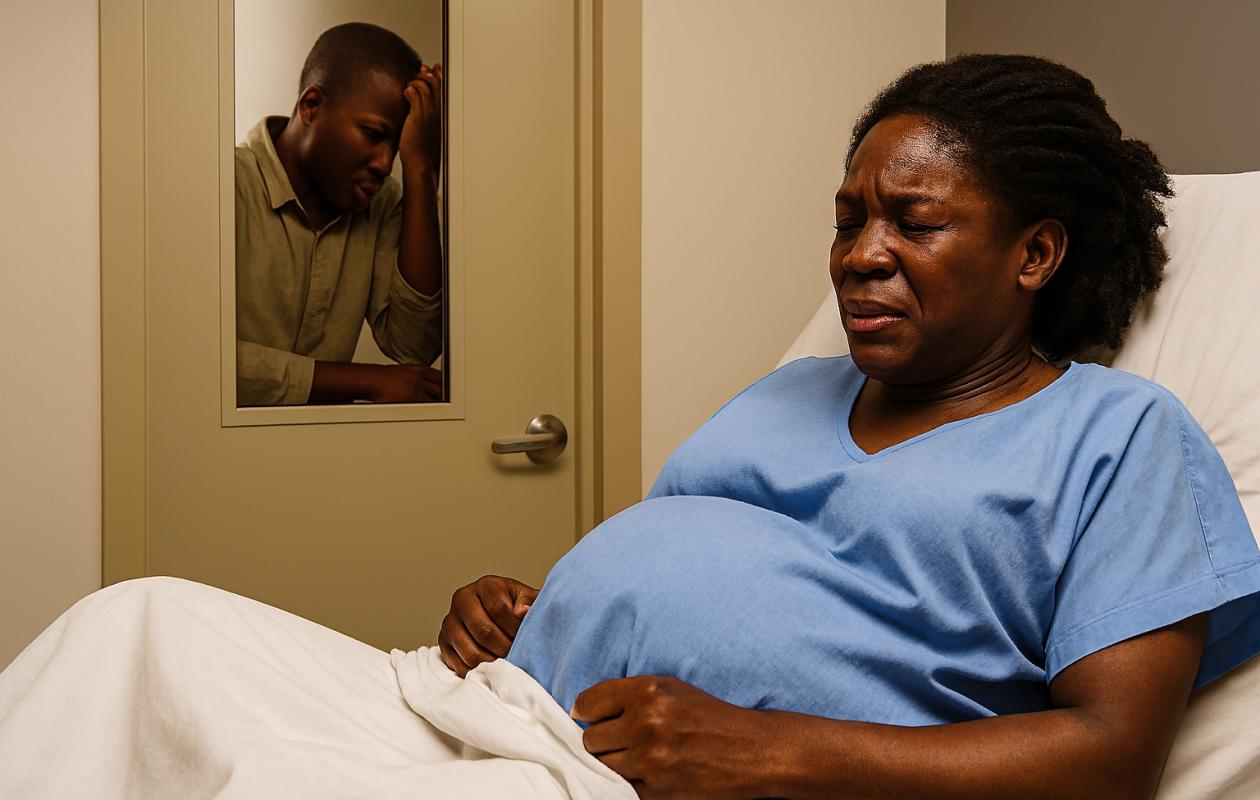
Childbirth is often told from the women's perspective, and rightly so. But behind the scenes, men also suffer, in a different way: a silent pain, without screams or contractions, but deeply real.
Sitting in his office, Pape Diouf is elsewhere. His mind is on his pregnant wife, who he left alone this morning. "When I left the house, she told me she was in pain. I didn't want to leave her, but I had to be at the office," confides the human resources director of a large Senegalese company.
That day, at 1 p.m., his phone rang. His mother-in-law announced, "She's in labor, we're going to the hospital." "I automatically felt dizzy. I left the office without telling anyone," he recalls, a nervous smile on his lips.
At the hospital, he was shocked: he wasn't allowed into the delivery room. "I shouted at the midwife. I told her I wouldn't stay outside while my other half was between life and death trying to give me a child." Despite his pleas, the white coats remained inflexible. So, he waited outside. He cried, prayed, and remembered. "All our moments together came back to me. I started crying again, asking God to give them back to me safe and sound."
Thirty minutes, one hour, two hours. Then, finally, the doctor: "Congratulations, your wife has given birth to a lovely boy." Pope gives thanks to God. Then, blackout. He faints.
On September 11, 2023, around 10 p.m., Ousseynou Seck experienced another scene. His wife felt a searing pain in her stomach. Without any experience, he called his mother. "I didn't know what to do; it was our first baby."
On their mother's advice, they went to the health center. The nurse confirmed: labor had begun. Ousseynou spent the night there, accompanied by his best friend. "I didn't sleep a wink; I was consumed by stress and fear."
At 4 a.m., his mother takes over. Exhausted, he goes to rest. When he returns around 7 a.m., the doctor reviews the file: high-risk pregnancy, severe anemia. The health center is not equipped to handle this case. The patient must be transferred.
They headed to a closer clinic. After several attempts, the verdict came in: vaginal delivery was no longer possible. The baby was tired, and so was she. "When they told me it would be a cesarean, I went pale. I thought about the costs, her health, everything."
An hour later, the news arrives: she has given birth. Relief, but the worry persists. He finds her in her room, her body marked by blood. "When I saw her, my heart was beating faster than normal." The nurse reassures him: it's normal.
He called his aunt to announce the birth, mentioning a cesarean. But his wife corrected him: "No, I gave birth normally." Surprised, he asked how. She recounted: "Once in the operating room, I asked the doctor if I could try one last time. He agreed. I pushed with all my strength, thinking of you. I knew you couldn't afford 500,000 francs."
"I knew I had the best wife in the world. She thought of me before she thought of herself. My love multiplied," Ousseynou confides.
Momar Sène's case is different. On the way to the maternity ward, he remains calm. "I wasn't afraid. I just asked my wife a few questions to see how she was doing." His only wish: that the child be born healthy, that the mother be well. This is his first child, he has no points of reference.
He imagined himself in the room, holding his wife's hand, witnessing the birth. But his dream was shattered. "The men stay outside. The women all give birth together; no man can enter the room," the midwife explained. He felt excluded, powerless.
Between distance, guilt and love
Ibrahima Diop, a Senegalese man living in France, was in Paris when his wife gave birth, thousands of kilometers away. “I had just gotten off the phone with her around midnight. She had back pain, but thought it was nothing. I reassured her. An hour later, her sister called me: ‘She’s in labor. We’re going to the hospital.’”
Ibrahima remains frozen. It's impossible to take a flight in the middle of the night. "I paced my living room. I prayed. I cried. I called every ten minutes, but no one answered, which increased my anxiety."
At 5 a.m., his sister-in-law cried in tears: "It's a boy. She's fine." He collapsed. "I cried like never before. No joy right away. Just relief and immense sadness. I wasn't there. I didn't hear her first cry. I couldn't tell her I loved her while she was suffering," the forty-year-old laments.
Two weeks later, back in Senegal, he discovered his son. “He was beautiful. But I felt like a guest. I had missed the most important moment of our lives.”
Today, that absence remains a scar. "I know she forgave me. But I never forgave myself. Being a father also means being there. And that day, I was somewhere else," he says sadly.
For Ms. Diène, a midwife, the presence of fathers at childbirth would be beneficial. "They would see how much women suffer while giving birth." But conditions in most Senegalese health facilities do not allow for this. "In hospitals, all the women are in a single delivery room. To preserve their privacy, men must stay outside," she explains.
She emphasizes their essential role: "They must be present, physically and emotionally, alongside their partner. Even if they cannot control everything, their simple presence, their words, their gestures of comfort during contractions and the resting phases can make a big difference."
Fear and stress are the most common reactions among men. "Some are very anxious, especially when they see their partner suffering without being able to intervene. Usually, we reassure them by explaining the steps of the process, the progress of childbirth, and what they can do to support their wife," says the midwife.
But sometimes, some faint, overwhelmed by stress or helplessness. "Childbirth is an intense moment, for both the mother and the father," concludes Ms. Diène.






















Commentaires (25)
Bel article
N.b: j'ai recu les felicitations de l'equipe medicale pour ma performance, mon calme et ma devotion sans tomber en syncope. Groß bisous a ma femme etaux filles cheries
On nous décrit l'angoisse d'une demie journée comparé à la souffrance de 9 mois, un corps défiguré à jamais et des effets secondaires qu'il faudra nécessairement gérer comme l'incontinence, le diabète, l'obésité, l'hemoroide, etc ...
Je passe sous silence les nuits sans sommeil, la convalescence qui perdure, le regard constant de la société toujours pré à dire qu'elle est une mauvaise mère, etc
Pauvre papa qui est vraiment mal barré.
Mon cœur saigne pour lui.
Vraiment ce texte vient juste de dérober la première place à nos vaillantes mères de toujours.
MALHEUREUSEMENT AU SENEGAL, ON INTERDIT AUX HOMMES D ENTER DANS LES SALLES D ACCOUCHEMENT.
Participer à la Discussion