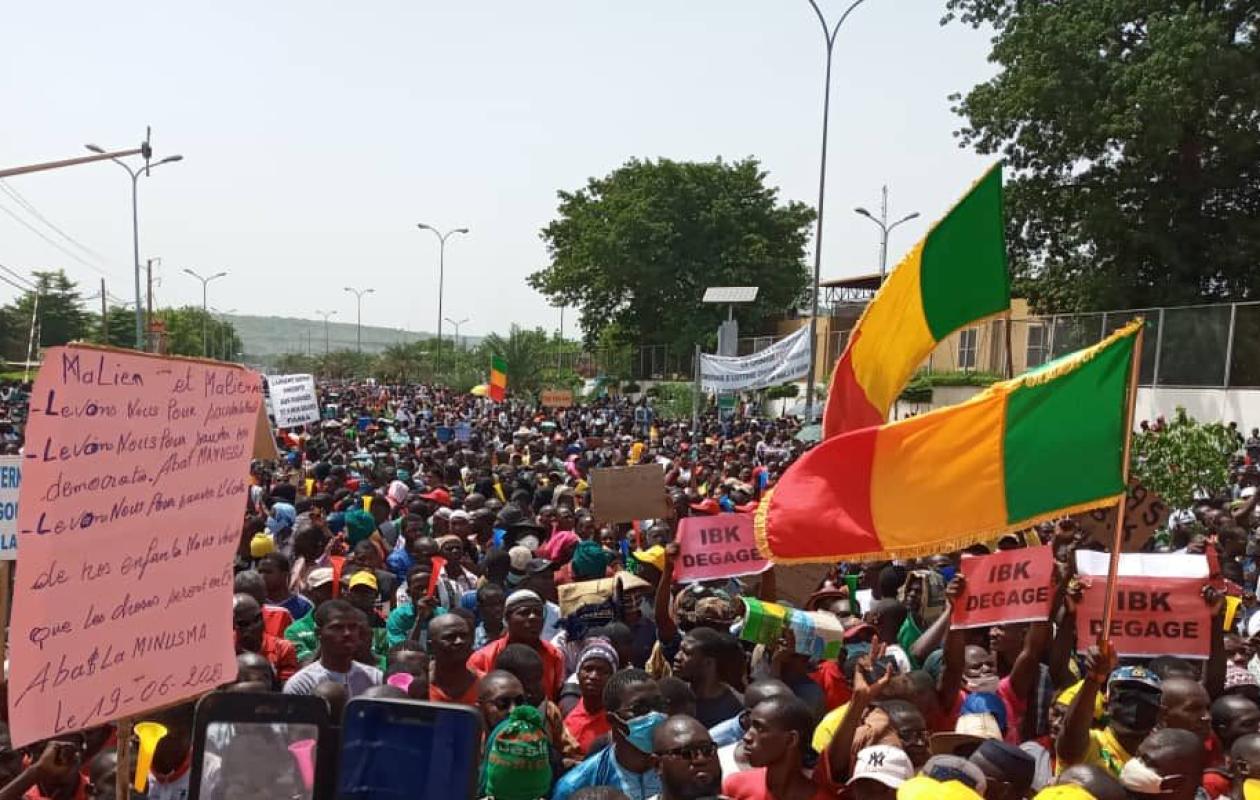
D’où vient cette crise malienne ?
Triggered in 2012 by an insurrection of Tuareg secessionist groups and jihadist movements, it originates from a complex mix of political, ethnic, and geopolitical tensions. Several factors help to understand its underlying causes:
A long-marginalized periphery : The Tuareg populations of northern Mali have long harbored identity-based and secessionist demands, feeling abandoned by the central government in Bamako. They are calling for independence or autonomy.
The Libyan collapse : The fall of Muammar Gaddafi's regime in 2011 led to the massive return to Mali of heavily armed fighters, who considerably strengthened the MNLA rebellion.
An opportunistic jihadist takeover : Terrorist organizations affiliated with Al-Qaeda, notably AQIM and later GSIM, were able to take advantage of this independence uprising, exploiting the porous borders and the state vacuum to establish themselves permanently, infiltrating and supplanting the Azawad independence fighters.
The institutional and military crisis : In March 2012, the inability of the armed forces to stem the advance of the rebels in the North triggered a coup in Bamako, plunging the country into total chaos and resulting in a temporary partition of the territory.
The failure of governance : Deep-rooted corruption, failing public services and a persistent gap between the central state and the population created fertile ground for the emergence of the insurgency.




















Commentaires (4)
Participer à la Discussion
Règles de la communauté :
💡 Astuce : Utilisez des emojis depuis votre téléphone ou le module emoji ci-dessous. Cliquez sur GIF pour ajouter un GIF animé. Collez un lien X/Twitter, TikTok ou Instagram pour l'afficher automatiquement.