Ramadan 2026 : dates, traditions et vie quotidienne en Afrique de l’Ouest
From fasting to iftar: how Ramadan 2026 is experienced in West Africa
Ramadan 2026 began on February 18 in Ivory Coast and on February 19 in Senegal. We are now in the middle of the holy month. In the streets of Abidjan, Dakar, Douala, and Bamako, life has slowed to a different pace. Here's what experiencing Ramadan in West Africa means—for those who observe it, and for those who want to understand.
Dates and the moon: why each country is different
In Côte d'Ivoire, the Higher Council of Imams (COSIM) and the Council of Islamic Associations and Organizations of Côte d'Ivoire (CODIS) have officially confirmed the night of February 17-18 as the night for observing the crescent moon. The start of the fast has been announced for Wednesday, February 18, 2026.
In Senegal, the Conacoc (Community of Ulemas, Imams and Religious Guides) confirmed the start of Ramadan for Thursday, February 19th. This one-day difference is explained by the methods of observation: some countries base their calculations on the local visibility of the crescent moon, while others rely on astronomical data.
Ramadan 2026 ends around March 19-20, and Eid al-Fitr is expected around March 20-21 according to the lunar observation of each country.
Daily fasting: between spirituality and modern life
From dawn (Fajr) to sunset (Maghrib), the faithful abstain from eating, drinking, and smoking. In Ivory Coast, the fast begins around 5:30-6:00 AM and ends around 6:30-7:00 PM, depending on the week. This amounts to approximately 12 to 13 hours of fasting per day.
For millions of Africans, this month does not just mean abstaining. It means praying more (the Tarawih, special night prayers, fill mosques after sunset), reading the Quran, giving (Zakat, the obligatory alms, but also spontaneous donations), and strengthening family ties.
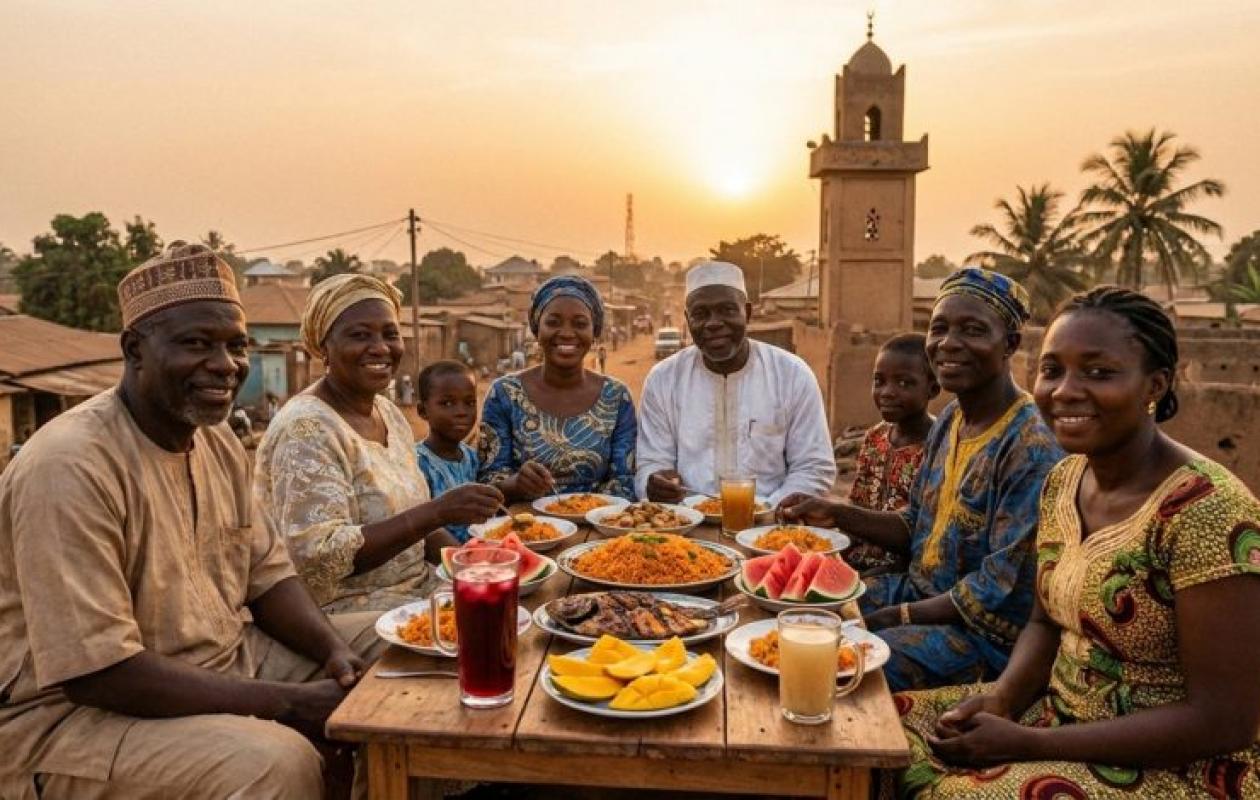
In cities, the atmosphere after breaking the fast (Iftar) is special. The streets come alive, families gather around the table, and the mosques hum with sound. It's one of the times of year when social solidarity is most visible.
The Ramadan table in West Africa
The breaking of the fast almost everywhere begins with dates and water, in accordance with prophetic tradition. Then comes the soup.
In Ivory Coast, the Iftar meal often consists of a light broth, vegetables, and a main dish such as fish and rice, placali, or plantain foutou with sauce. Sweets and juices made from bissap (hibiscus), ginger, or ditakh (a Senegalese fruit) are essential.
In Senegal, Ramadan has its emblematic dishes: thiéboudienne (rice with fish) remains king, but ngalakh (a porridge made with millet, peanut butter, and baobab) is particularly popular during this blessed month. Touba coffee, spiced with djar pepper, often accompanies Suhur (the pre-dawn meal).
In Cameroon, in the predominantly Muslim northern regions (Adamawa, North, Far North), millet couscous with beef in sauce is a Ramadan staple. In cities like Yaoundé and Douala, restaurants and street vendors adjust their hours to the rhythm of the fast.
The diaspora is also fasting
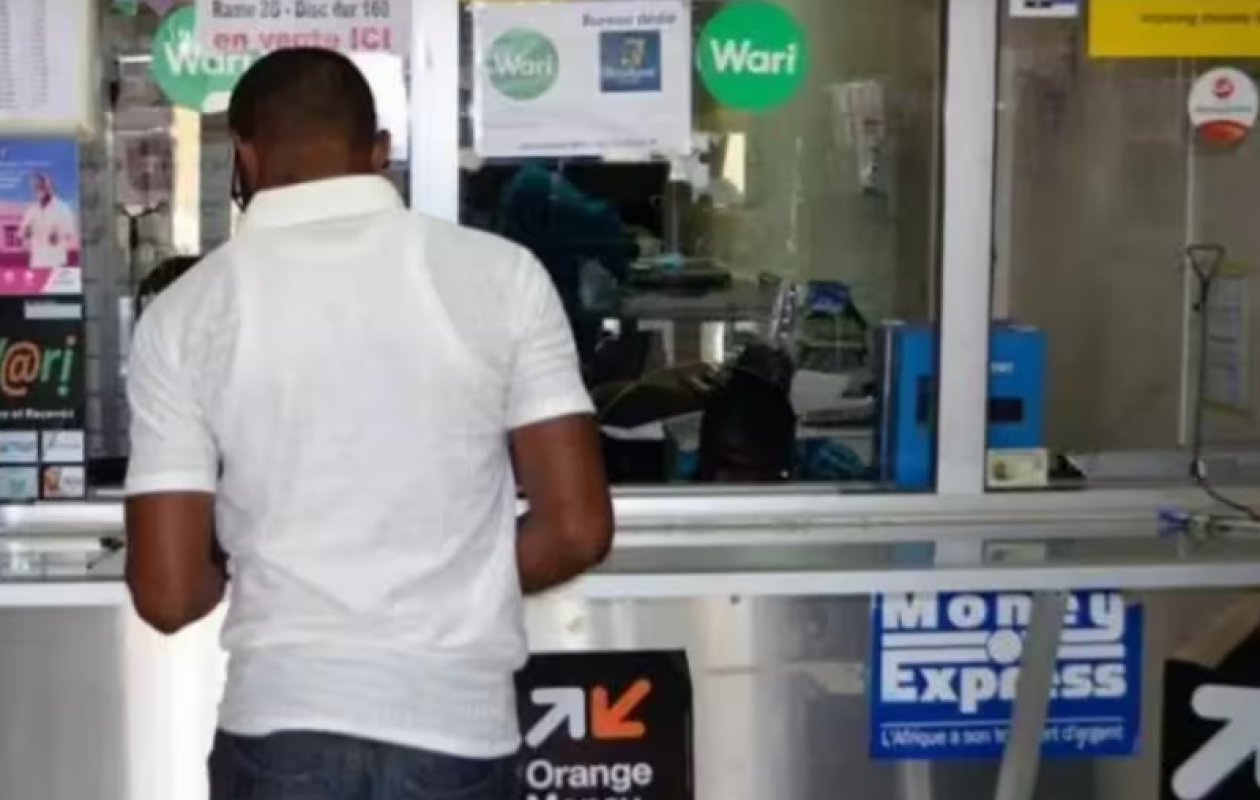
In France, Belgium, Italy, and Canada, African Muslim communities observe Ramadan with the same intensity as in Africa. Mosques in Paris, Lyon, and Marseille are packed. Associations organize communal Iftars for the most vulnerable. Money transfers to families back home increase during this month, as many send enough to provide a more lavish meal.
Digital technology has also transformed Ramadan for the diaspora: live broadcasts from mosques on YouTube, WhatsApp groups for prayer times, recipes shared on TikTok. The connection with the continent remains, even thousands of kilometers away.
Beyond fasting: what Ramadan builds
Ramadan is a month when social inequalities become more visible—and when communities respond. Mosques organize meal distributions for those in need. Associations raise funds to buy food. Wealthier families "sponsor" families in need so that no one breaks the fast without food.
In countries where a significant portion of the population lives below the poverty line, this annual act of solidarity has real value. Ramadan is not just a religious ritual. It is also a social structure that binds millions of people together for thirty days.














Commentaires (0)
Participer à la Discussion
Règles de la communauté :
💡 Astuce : Utilisez des emojis depuis votre téléphone ou le module emoji ci-dessous. Cliquez sur GIF pour ajouter un GIF animé. Collez un lien X/Twitter, TikTok ou Instagram pour l'afficher automatiquement.