
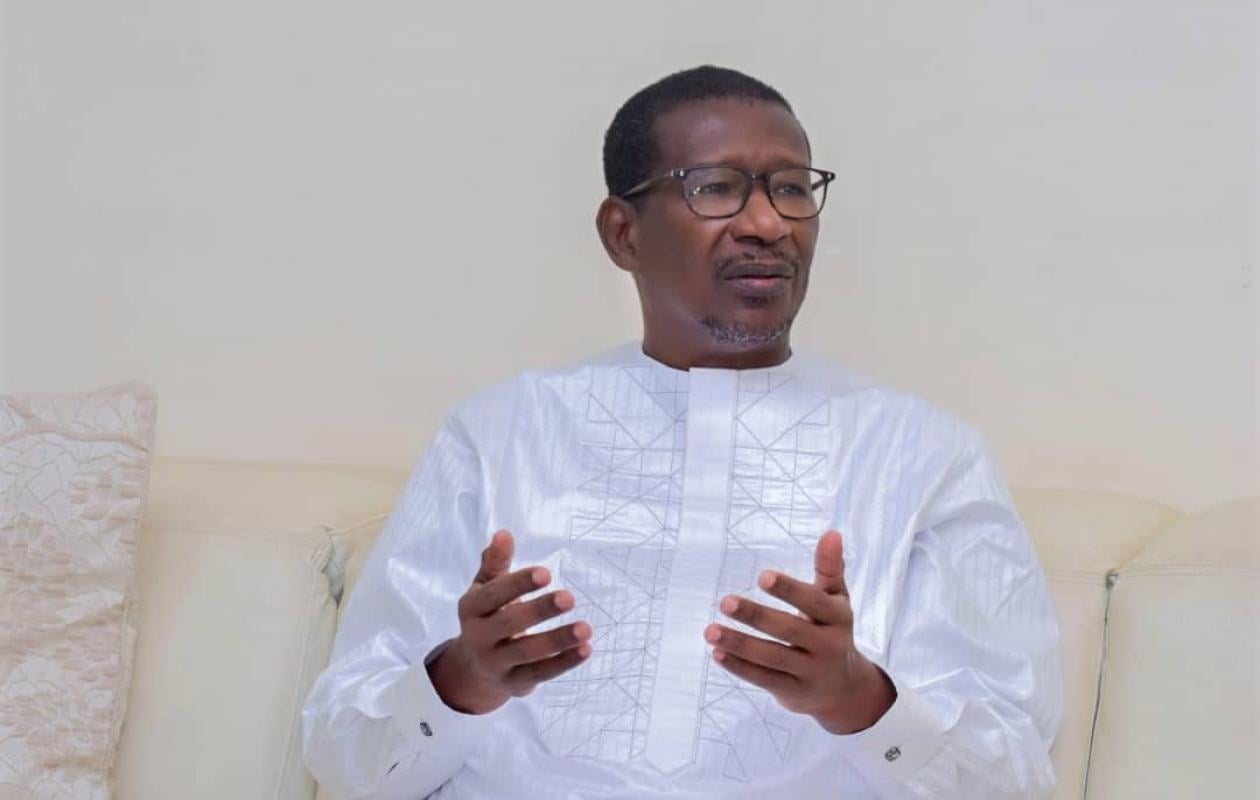
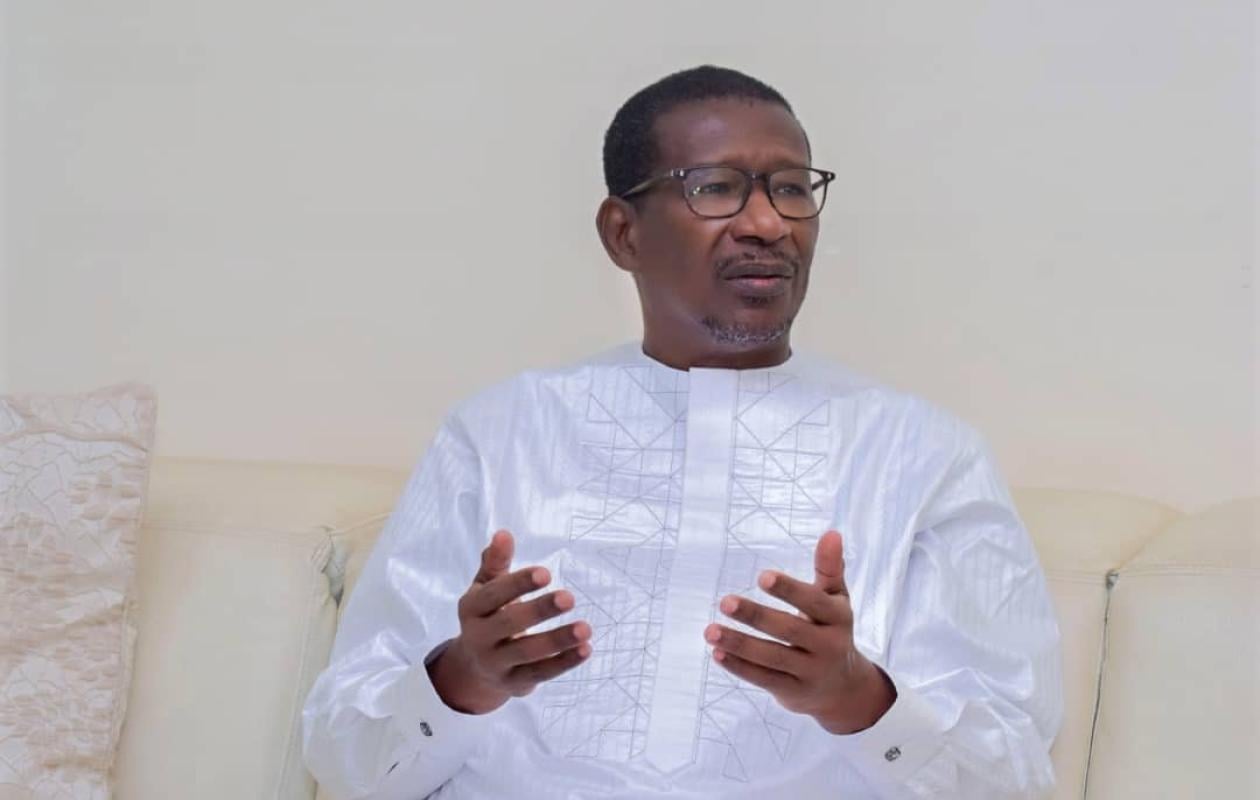
Création de la CENI : une réforme institutionnelle à haut risque (Par Ibrahima H. DEME, "Juge Dème")
Since the adoption of the consensual Electoral Code of 1992, Senegal has succeeded in building, within an often passionate political environment, an electoral system whose robustness cannot be seriously questioned. This system, while not perfect, has nonetheless enabled three major democratic transfers of power, in 2000, 2012, and 2024. These transfers undoubtedly constitute the most striking proof of our electoral model's capacity to ensure the integrity of the ballot, the acceptance of the results, and the peaceful regulation of the competition for power.
This is why we have always maintained, sometimes contrary to prevailing narratives, that the Senegalese electoral system remains one of the most secure in the world. This assertion is not merely an external observation. It is also based on personal experience gained at the heart of the electoral process, notably as a magistrate delegated by the Court of Appeal to oversee the regularity of electoral operations, as well as a member of departmental vote-counting commissions, having participated in the monitoring of eight elections, including presidential, legislative, municipal, and referendum elections. It also rests on a simple observation: a system that allows the opposition to come to power three times, in different historical contexts, cannot be considered fundamentally flawed. Therefore, we must have the courage to say it: the recurring demand for the creation of an Independent National Electoral Commission (CENI), long championed by certain segments of the opposition, was more a matter of partisan politics than an objectively demonstrated institutional necessity. It often stemmed from a principled distrust of the Ministry of the Interior, without any real evidence of the territorial administration's inability to organize regular, transparent and fair elections.
However, the proposed reform of the Electoral Code currently under consideration appears to be transforming this political demand into an institutional framework. It proposes the creation of a CENI (Independent National Electoral Commission) tasked with exercising the powers previously held by the Ministry of the Interior, even though the explanatory memorandum of the proposal acknowledges that Senegal has always placed transparency, inclusivity, and the regularity of elections at the heart of its political system.
At first glance, such a reform may seem appealing. The word “independent” always carries a certain allure in democratic debate. But in institutional matters, a reform being described with reassuring language is not enough to guarantee its merit. Proclaimed independence is never a sufficient guarantee if it is not accompanied by competence, accountability, oversight, and experience.
It is precisely at this level that the project raises serious concerns.
The reform is not simply an adjustment of the existing system. It represents a profound shift, entrusting the Independent National Electoral Commission (CENI) with the preparation, organization, and administration of national, territorial, and referendum elections. The proposal specifically assigns it the revision of electoral lists, the management of the electoral map, the organization of the collection and verification of sponsorships, the receipt of candidate applications, the organization of voting, the counting of ballots, and the collection and transmission of official reports. In other words, the CENI would become the mind, the arm, and, to a large extent, the heart of the electoral process.
Such a choice calls for caution.
The current system rests on a proven institutional framework: territorial administration, the National Autonomous Electoral Commission (CENA), and the judiciary. The administration handles the practical organization of the elections; the CENA oversees them; and the judiciary controls the process, resolves disputes, and ultimately guarantees the regularity of the process. It is this structure, with its division of roles, cross-checks, and institutional balances, that has enabled Senegal to hold generally regular, transparent, and fair elections since 1992.
In this regard, the National Electoral Commission (CENA) has played a significant role in the electoral process since its inception. It already performs an essential mission. Law No. 2005-07 entrusts it with the control and supervision of all electoral and referendum operations. It ensures their proper logistical organization, implements necessary corrective measures for any observed malfunctions, and enforces the electoral law to guarantee the regularity, transparency, and integrity of the ballots, while ensuring that voters and candidates freely exercise their rights. Furthermore, the CENA is required to be present at every stage of the process, from voter registration to the provisional announcement of results. In the event of non-compliance with electoral regulations by an administrative authority, the CENA may, after formal notice, issue immediately enforceable injunctions, rectifications, removals from the authority, and substitutions of actions, without prejudice to its power to refer the matter to the competent courts.
It is therefore clear that the current system is not that of an administration left to its own devices. It is that of an administration that is monitored, corrected as needed by an independent authority, and then subject to judicial review. This combination has made it possible to maintain a valuable balance between administrative efficiency, independent oversight, and judicial guarantees. Why then dismantle this three-pronged approach?
Any sincere observer of the Senegalese electoral process knows that the elections held since 1992 have not been marred by major dysfunctions that would call into question the overall integrity of the ballots. There may have been disputes, tensions, and accusations, as in any thriving democracy. But in our recent history, there has been no systemic electoral crisis resulting from a structural inability of the territorial administration to manage the process.
On the contrary, the system is now so well-established that barely a few hours after the polls close, the main trends emerge and the results are practically known. This speed is no accident. It is the product of long administrative experience, a well-managed territorial organization, a proven system for gathering information, and a progressively strengthened electoral culture.
One cannot dismantle such a structure with impunity.
Because every new system, however well-intentioned, necessarily involves a phase of learning, adjustment, imperfections, and sometimes flaws. This is a constant law of institutional engineering. But can Senegal afford the luxury of experimenting, in an area as sensitive as elections, with a new structure whose operational competence, administrative culture, and internal control mechanisms have not yet been tested? Can it risk opening, through hasty reform, avenues for dysfunction, manipulation, or massive fraud that could call into question the voters' choice?
We think not.
It goes without saying that the creation of the CENI, under the proposed conditions, represents less of a step forward than a worrying step backward. Indeed, it calls into question the strength of a system that has allowed three peaceful transfers of power and which, consequently, has proven its ability to guarantee citizens' freedom of choice. Far from necessarily strengthening democracy, it risks weakening one of its most sensitive pillars.
The first danger is that of institutional disintegration. An electoral system is not simply a set of texts. It rests on practices, know-how, accumulated skills, chains of responsibility, and institutional memory. By abruptly replacing this proven architecture with a new structure, without a controlled transition phase, uncertainty is introduced where stability had previously been a guarantee.
The second danger is the concentration of electoral functions. In the current system, responsibilities are distributed among several actors, with cross-checking mechanisms in place. This allows the administration to be controlled by the CENA (National Autonomous Electoral Commission) and for disputes to be brought before the courts. The proposed reform, by concentrating the bulk of electoral operations in the hands of the CENI (Independent National Electoral Commission), blurs the lines between organization, supervision, and control.
The third danger concerns the judiciary. By granting the Independent National Electoral Commission (CENI) considerable prerogatives in the conduct, oversight, and regulation of electoral operations, the proposed legislation risks diminishing the central role of the electoral judge. The judge would not disappear, but could be relegated to a secondary role within a system dominated by an independent administrative authority vested with extensive powers. However, in electoral matters, the judge must never be a peripheral actor. They are the ultimate guarantor of the integrity of the ballot and the protection of the vote.
In addition to this, the project includes the technical innovations announced, notably the gradual digitization of the electoral process, the automated collection and verification of endorsements, the digital filing of candidacies, the automated transmission of results, and, eventually, the possibility of electronic or online voting. These innovations can be beneficial if they are properly managed, audited, and governed by robust technical and institutional safeguards. However, in a context of fragile political trust, they can also become sources of suspicion and disputes if introduced without sufficient consensus, public education, and effective oversight.
This is not about rejecting all reform. The adoption of a single ballot seems to be unanimously supported. It is also possible to strengthen the powers of the CENA (National Independent Electoral Commission), improve the transparency of the electoral register, increase parties' access to relevant data, enhance the publication of results polling station by polling station with the contribution of the press, and modernize the technical tools without disrupting the overall structure.
But reforming does not mean deconstructing.
The proposed reforms must be useful in consolidating existing gains, but not in undermining the balance in the name of an abstract ideal. However, in this case, the creation of the CENI appears to be an excessive response to a problem that has not been sufficiently demonstrated.
It is therefore important to ask the right questions.
Why replace a system that enabled the changes of government in 2000, 2012, and 2024? Why dissolve the CENA when it already has, in law, significant powers of oversight, injunction, rectification, removal, and substitution? Why take away from the territorial administration a mission it has carried out for decades with recognized effectiveness?
Why weaken, even indirectly, the role of the electoral judge when the justice system must remain the ultimate guardian of the integrity of the vote? Why experiment with a new architecture in a field where the slightest flaw can produce major political consequences?
These questions should not be dismissed out of hand. They deserve a serious national debate, far removed from slogans and partisan reflexes.
Ultimately, if we intervene in this debate, it is not to defend the status quo on principle, much less to deny the need to improve the electoral process. It is primarily to sound the alarm and warn against the dangers of a reform that, under the guise of modernization and independence, could undermine one of the most precious achievements of our democracy.
Senegal has succeeded where many countries have failed: making elections an instrument of change, not a factor of rupture. This achievement belongs to the Senegalese people. It must not be subjected to the political calculations of the moment, nor to poorly assessed institutional seductions.
Because ultimately, the question at hand involves a fundamental choice: to strengthen democracy by building on what works, or to expose it to uncertainty in the name of a reform whose guarantees are questionable.
This is the choice that is being made today.
Ibrahima H. DEME
President of the ETIC party





















Commentaires (20)
Participer à la Discussion
Règles de la communauté :
💡 Astuce : Utilisez des emojis depuis votre téléphone ou le module emoji ci-dessous. Cliquez sur GIF pour ajouter un GIF animé. Collez un lien X/Twitter, TikTok ou Instagram pour l'afficher automatiquement.