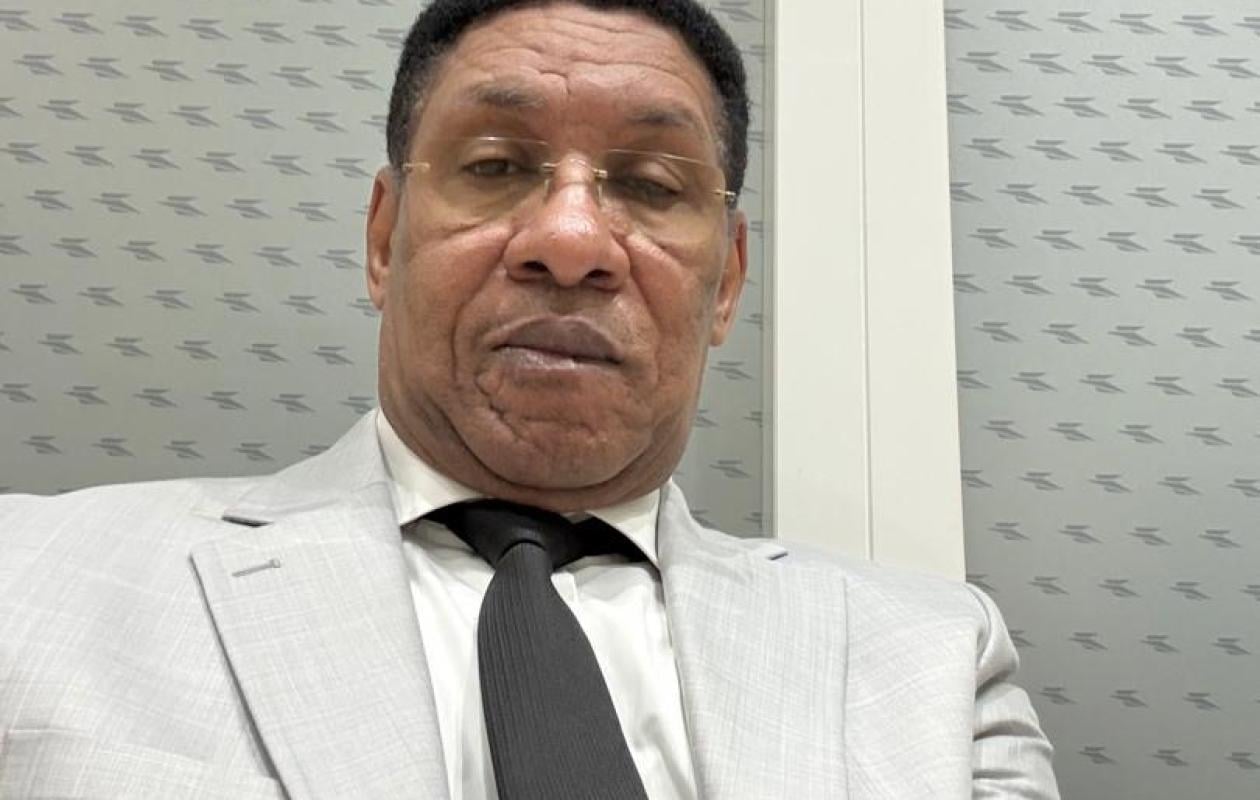
Le monde à l’épreuve de la loi du plus fort (Par Moustapha BA)
In one of my previous articles, I wrote that the world seemed to be sliding towards a form of permanent disorder, as if collective reason were gradually fading away. Today, this concern appears more relevant than ever. Certain decisions made at the highest levels of government raise questions, unsettle, and are dizzying, so far removed do they seem from the principles that underpin coexistence between nations.
It is indeed difficult to understand—politically, morally, and legally—how a state can arrogate to itself the right to summon or neutralize the president of another country, sovereignly elected by its people, as if he were a mere political tool. Such an approach reflects a worrying shift in the way power and international relations are viewed.
What happened in Venezuela challenges the universal conscience. It calls for a collective response to any unilateral action that undermines global stability. Whatever the pretext, such an act constitutes a clear violation of international law and the fundamental principle of state sovereignty.
No president, however powerful, can presume to abduct or remove a sitting president of another country. No head of state is above international law. International law cannot be applied selectively, respected when it serves certain interests and ignored when it conflicts with them.
If such practices were to become commonplace, then no country, no leader, no people would truly be safe. Today Venezuela, tomorrow who? Africa? Asia? All of Latin America? Where are the world's regulators? Where are the institutions responsible for guaranteeing balance, peace, and mutual respect among nations?
Allowing such acts to go unchallenged would set an extremely dangerous precedent for the world order. There is a real risk of the world descending into a geopolitical jungle where force replaces law, and where the sovereignty of nations becomes a fragile and conditional concept.
Faced with this, silence is not an option. To remain silent is to condone. To accept is to legitimize. It is urgent that nations, intellectuals, peoples, and international institutions mobilize to defend a simple but essential principle: no state has the right to act as judge, jury, and executioner of another.
⸻
Moustapha BA
President, International Aid
Honorary President, OCD International NGO – Federation (Switzerland)
📧 contact@aide.international
![[Exclusif] Révision de la Constitution : Le Conseil constitutionnel invalide le vote des députés](https://image.seneweb.com/content/news/2026-28-09//thumb_1260x800_6a4fdec36aa84_Tpa745ZYpD.jpg)










Commentaires (14)
Se taire c’est cautionner, accepter c’est légitimer.
Nous sommes face à une dérive sans précédent et personne ne semble s’en soucier.
Où va le monde?
Trump n’est pas hypocrite. S’il deteste une chose et veut autre chose, il le dit haut et fort et le montre.
Nous avons toujours été dans une jungle et le serons encore pour longtemps.
Les nations qui survivront sont celles unies, où solidarité et patriotisme règnent.
La moindre des querelles internes mal gerée ouvre une breche vers une destruction.
C'est valable pour une famille, c'est valable pour d'autres structures.
C'est le numero 1 (UNION)
Apres, mais qu'apres, si l'on a 2 ou 3 vieux fusils a coté, ça peu dissuader... des fois.
Que Dieu apporte la paix partout dans le monde.
Participer à la Discussion
Règles de la communauté
💡 Astuce : Utilisez des emojis depuis votre téléphone ou le module emoji ci-dessous. Cliquez sur GIF pour ajouter un GIF animé. Collez un lien X/Twitter, TikTok ou Instagram pour l'afficher automatiquement.
Se connecter
Commentez avec votre profil, votre photo, et soyez averti des réponses.