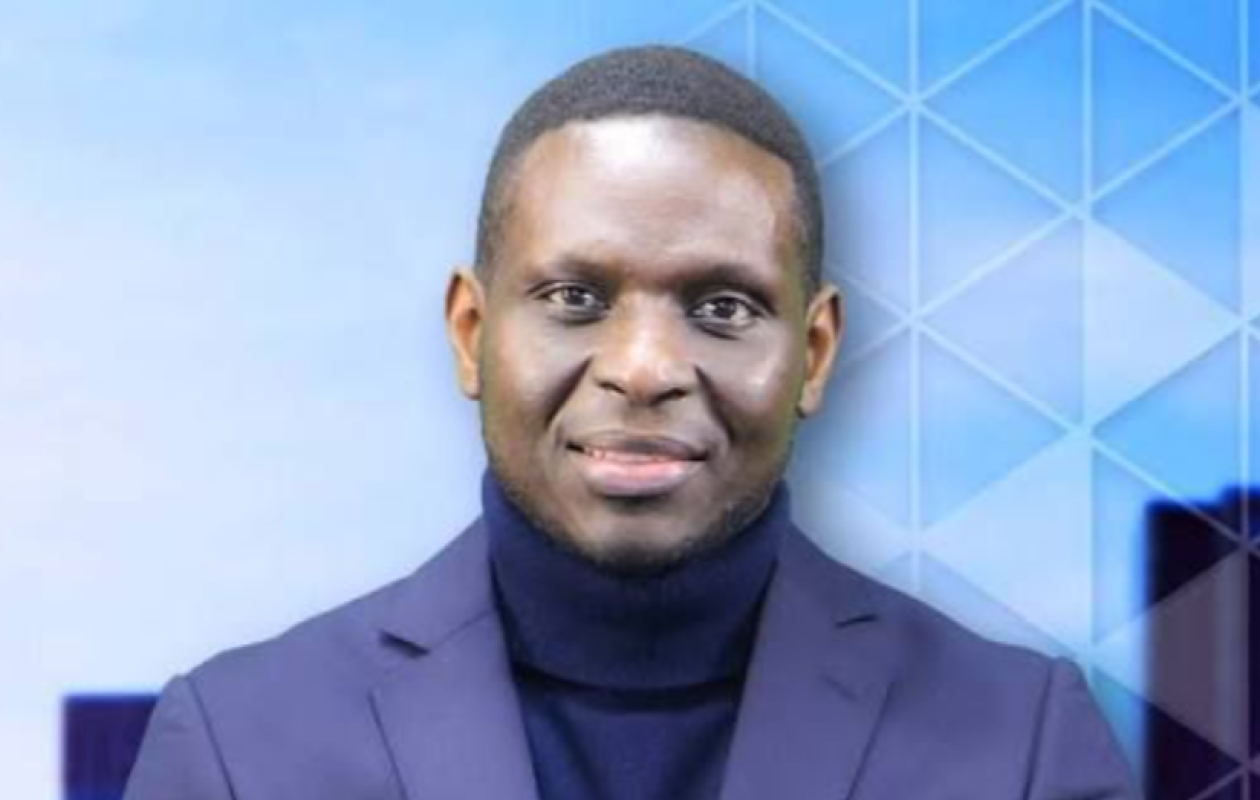
Sans vérité, l’État de droit ne tient pas (Par Ibrahima Fall)
We often imagine that the greatest threats to a rule of law state are coups d'état, violence, or institutional crises.
However, the first cracks often appear much earlier. They appear when a society gradually ceases to value truth.
Let us, however, be clear about the meaning of words. This is not about philosophical, religious, or scientific truth. It is about a more modest requirement, but one that is crucial for any democracy: fidelity to the facts.
A democracy can thrive on profound disagreements. It cannot, however, sustainably exist without a shared foundation of facts. Indeed, the rule of law rests not only on a constitution, laws, or courts. It also rests on an invisible infrastructure: trust.
Paul Valéry wrote that "the social world is fiduciary." Collective life rests on shared trust. Money only has value because it is trusted. Contracts only have value because commitments are presumed to be honored. Institutions only have authority because citizens grant them trust.
The same applies to public speech. When it ceases to bind those who utter it, the entire architecture of trust begins to weaken: promises become reversible, contradictions no longer require explanation, and facts matter less than affiliations.
Therefore, the question is no longer: "What are the facts?", but: "Who states them?".
From that moment on, facts cease to be a common good. They become instruments of political mobilization.
All democracies face this temptation. The oldest are not immune, but they often have institutional memory, checks and balances, administrative traditions, and democratic habits built up over the course of crises.
Younger democracies face an additional challenge. Institutions can be created quickly, but the habits that bring them to life take much longer.
Thus, a constitution can be adopted in a few months, but a culture of fidelity to facts is built over generations.
This is precisely where a nation's cultural resources become decisive. Whether lawyers speak of a Constitution or political scientists of institutions, the same reality prevails: no institution can function sustainably without the civic virtues that animate it.
In Senegal, these resources exist. Jom is the courage to stand by one's words; ngor is the refusal to separate what one says from what one does; kersa reminds us that there are moral limits that no immediate interest should make us forget.
These values are not solely a matter of cultural heritage. They constitute informal institutions because they generate trust, make cooperation possible, and lend credibility to formal institutions.
Thus, no law can compel a people to be honest. No decree can manufacture trust. No constitution can, on its own, create a culture of responsibility. This is why the normalization of contradictions, of empty rhetoric, or of the denial of facts is never simply a matter of political communication. It strikes at the invisible foundations of the rule of law.
This mechanism is not unique to politics.
Business leaders know this well. An organization doesn't function sustainably simply because its procedures are well-designed. It functions because everyone believes in the information that circulates, the decisions that are made, and the commitments that are kept. When this trust disappears, controls multiply, procedures become cumbersome, costs increase, and performance eventually collapses.
The same applies to a democracy.
Good governance is impossible without a social, moral, and political infrastructure. Adherence to the facts is part of this invisible infrastructure.
However, one paradox deserves to be highlighted.
In a society like Senegal where religion occupies an important place in collective life, truth is presented as a fundamental spiritual requirement.
However, in public debate, loyalty to one side sometimes prevails over loyalty to the facts.
This tension does not call faith into question. It simply serves as a reminder that a value only transforms a society when it is truly embodied.
However, let's not be mistaken. Cacophony is not a problem. Disagreement is not a problem. A plurality of opinions is not a problem. They are the sign of a vibrant democracy because democracy does not need unanimity. It needs a shared requirement: that facts prevail over personal affiliations.
The real danger arises when belonging to a particular camp becomes the criterion by which facts are recognized, contested, or ignored. From that moment on, the debate no longer concerns the interpretation of the facts; it concerns their very existence. And reality always has the final say. Facts can be circumvented in discourse for a long time, but they can never be circumvented in reality.
A company that refuses to accept the facts eventually fails. A public policy that doesn't start from the facts ends up producing the very effects it sought to avoid. A democracy that permanently distances itself from the facts also eventually clashes with reality. And reality always reminds us that no amount of rhetoric, however seductive, can permanently erase the facts.
Fidelity to the facts is therefore not a moral luxury. It is an institutional necessity. It constitutes a democracy's primary investment in its own future, because there can be no trust without fidelity to the facts. And without trust, even with the best will in the world, there is little chance that things will fall into place, to use a now-common expression.
Ibrahima Fall holds a doctorate in management science from the École des Mines de Paris (Mines Paris – PSL), and is the founding president of the management research and expertise firm Hommes & Décisions.
He is the author of *The Company Against Knowledge of Real Work: Humans First or the Syndrome of the Sacrificed First* (Éditions L'Harmattan). He also co-edited, in 2026, the reference work *Command Never Sleeps: Transform or Perish* , published by Éditions de l'Aube under the patronage of the Centre for Advanced Military Studies (CHEM).
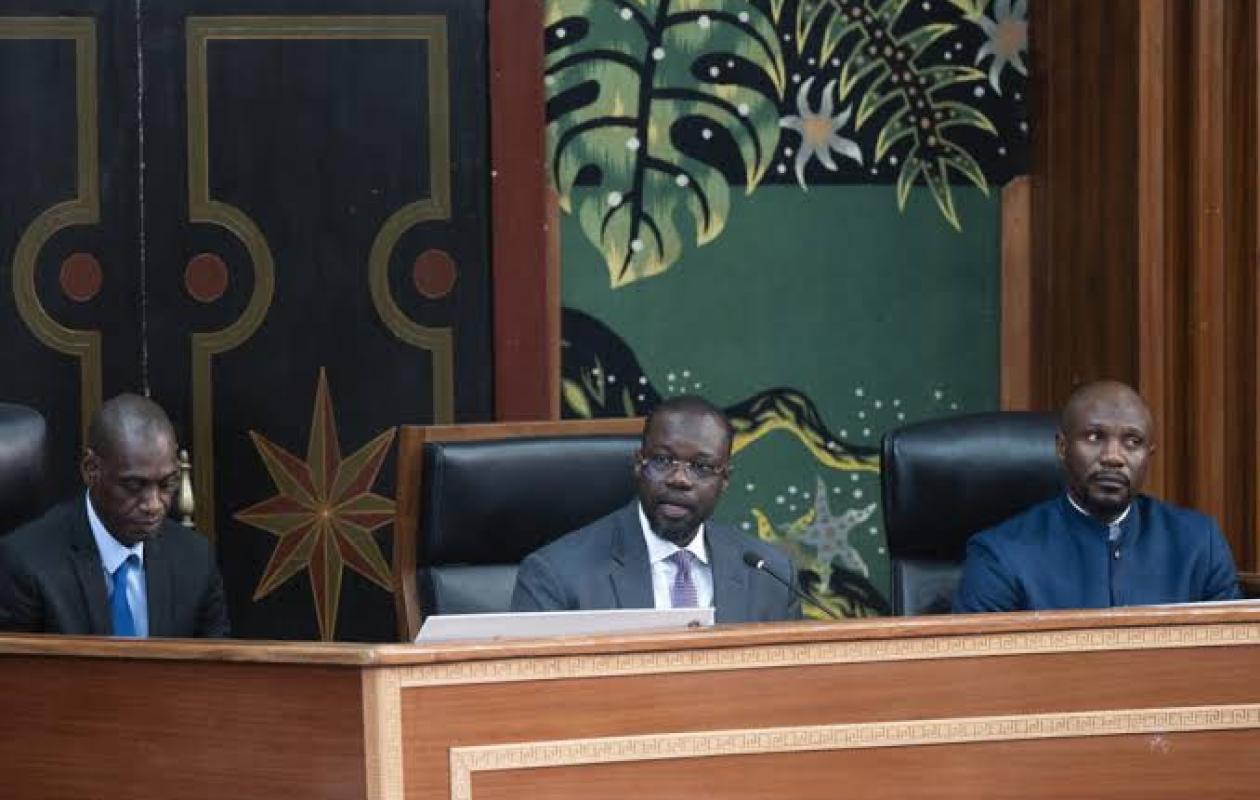
![[Exclusif] Révision de la Constitution : Le Conseil constitutionnel invalide le vote des députés](https://image.seneweb.com/content/news/2026-28-09//thumb_1260x800_6a4fdec36aa84_Tpa745ZYpD.jpg)
















Commentaires (3)
Participer à la Discussion
Règles de la communauté
💡 Astuce : Utilisez des emojis depuis votre téléphone ou le module emoji ci-dessous. Cliquez sur GIF pour ajouter un GIF animé. Collez un lien X/Twitter, TikTok ou Instagram pour l'afficher automatiquement.
Se connecter
Commentez avec votre profil, votre photo, et soyez averti des réponses.