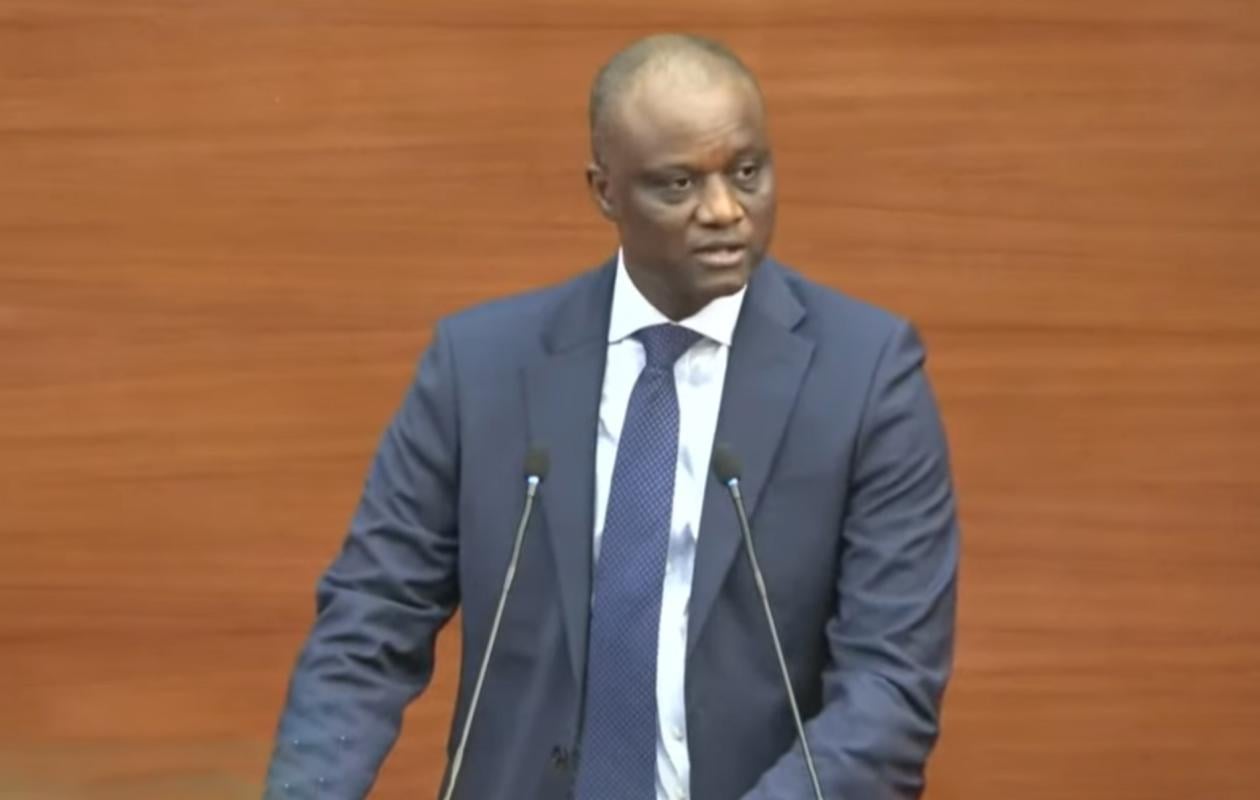
Budget 2026 : Une hausse fiscale fondée sur la rationalisation des exonérations et la taxation ciblée
As part of the 2026 budget proposal, the Senegalese government is implementing "a measured increase in the tax burden," which it justifies by "the need to restore public finances without unduly penalizing economic activity." This approach relies primarily on two levers: streamlining tax exemptions and implementing targeted taxation on specific sectors.
Presented during the review of the budget of the Ministry of Economy, Planning and Cooperation (MEPC), this approach is part of the implementation of the Economic and Social Recovery Plan (PRES) and the National Development Strategy 2025-2029. According to the Minister, the aim is to "reduce tax loopholes deemed ineffective." Abdourahmane Sarr stated that "the projected increase in the tax burden, estimated at 23% of GDP in 2026 , does not result from a general tax hike, but from a review of existing exemptions. Several tax measures granted in the past are considered costly for the State budget and insufficiently effective in terms of investment, employment, or skills transfer."
Indeed, the rationalization aims to refocus tax benefits on strategic sectors and projects with a strong economic and social impact, while improving the transparency and fairness of the tax system. The stated objective is to limit windfall gains and better align tax incentives with the priorities for transforming the economy.
Targeted taxation to broaden the tax base
The second lever concerns the targeted taxation of certain activities identified as having untapped revenue potential. The Government specifically mentioned "the taxation applicable to games of chance , whose rapid growth contrasts sharply with their relatively small contribution to public revenue." "This selective approach aims to broaden the tax base rather than increase the burden on households or already vulnerable SMEs. It is also accompanied by efforts to gradually integrate the informal sector into the tax system through appropriate structuring and formalization mechanisms," the minister explained.
Preserving purchasing power and competitiveness
In response to concerns raised by parliamentarians regarding the potential impact of increased taxation, the Government sought to reassure them that these adjustments should not directly affect people's incomes . It emphasized that, compared to the OECD average, where the tax burden is around 30% of GDP, Senegal's remains relatively moderate. The authorities also believe that the reform will contribute to improving tax fairness by reducing disparities between taxpayers and strengthening tax justice, a condition deemed essential for gaining the support of economic actors.
“In a context of high debt and limited budgetary leeway, streamlining tax exemptions and targeted taxation appear as necessary but strategic choices , designed to secure the resources needed to finance public policies while preserving growth momentum,” he added. He nevertheless emphasized that “the challenge of implementation remains, which will have to reconcile efficient revenue collection, clarity of reforms, and social acceptability, in order to prevent tax adjustments from hindering investment and job creation.”

















Commentaires (3)
Tout le monde doit payer ou personne ne paie. Faut être équitable.
Participer à la Discussion
Règles de la communauté :
💡 Astuce : Utilisez des emojis depuis votre téléphone ou le module emoji ci-dessous. Cliquez sur GIF pour ajouter un GIF animé. Collez un lien X/Twitter ou TikTok pour l'afficher automatiquement.