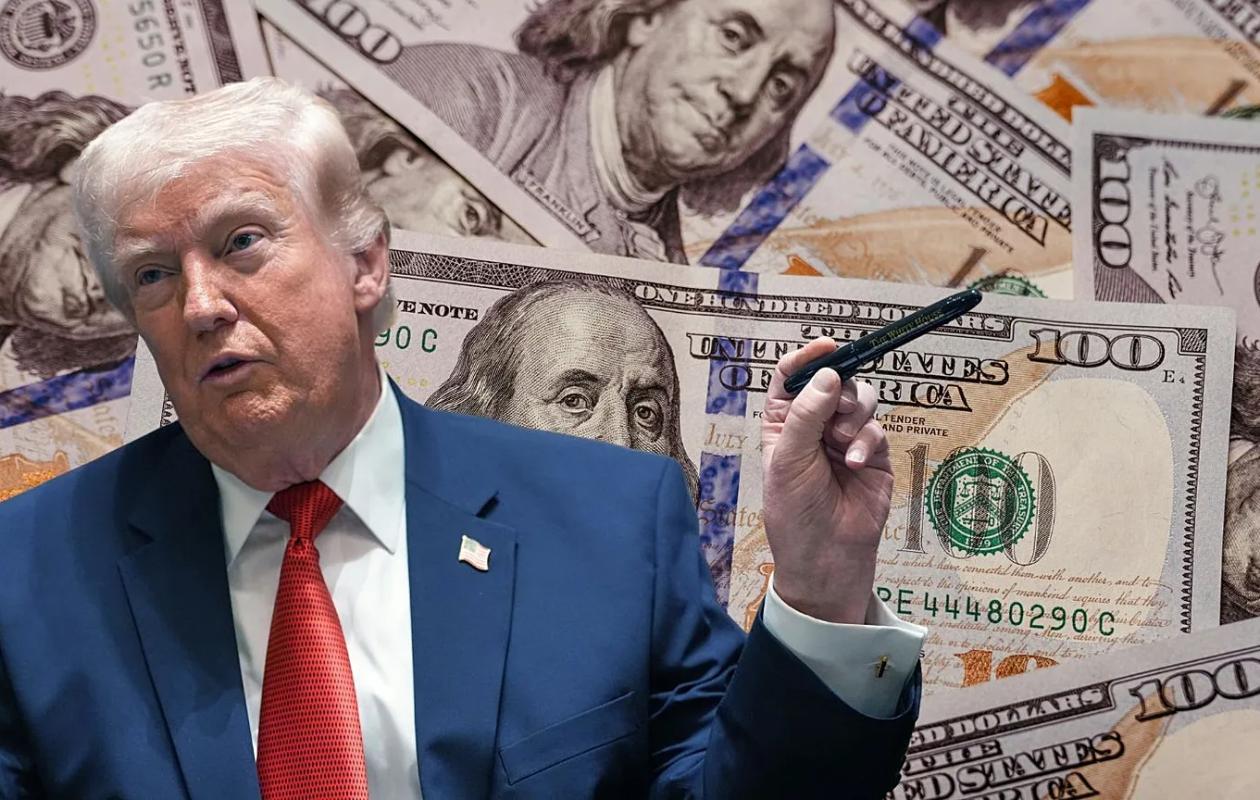
Comment Washington use de menaces et de dollars pour expulser ses migrants en Afrique
It began with threats to suspend US visas for a number of African countries. Then, Washington started dispersing migrants from all over the world across the continent.
Pheap Rom, a 43-year-old Cambodian, ended up in a high-security prison in Eswatini, ruled with an iron fist by King Mswati III. "I didn't understand why I was being deported to Africa when I am Cambodian," he told AFP.
Others were expelled to the Democratic Republic of Congo (DRC) or Uganda; still others disappeared off the radar after being sent to war-torn South Sudan.
The United States is using visa suspensions to force African countries to accept third-country nationals as part of Donald Trump's crackdown on immigration, two former State Department officials told AFP.
Two-thirds of the 39 countries worldwide targeted by these visa suspensions are in Africa. And, according to a count by NGOs and US Democratic senators, nearly half of the states that have signed agreements to accept people deported from the United States are African.
"These countries are being put under pressure through threats of tariffs, visa suspensions or aid reductions," the senators continued in their report.
Once there, migrants fall "into a legal black hole", detained without being charged, in an unknown country, sometimes deprived of rights, sent back to another country such as from Ghana or back home such as from Equatorial Guinea at the risk of their lives, lawyers denounced.
The White House did not respond to requests for comment from AFP. "Implementing the Trump administration's immigration policies is a top priority," the State Department replied.
Barely back in the Oval Office at the beginning of last year, Donald Trump had proceeded with the mass expulsion of migrants to Latin America.
The most emblematic case was the sending to El Salvador of more than 250 Venezuelans accused without evidence or trial of being members of a criminal group and detained for months at the infamous Penitentiary Center against Terrorism (Cecot).
Africa is, in a way, chapter two. According to former State Department officials, these policies of expulsion to third countries were developed by Stephen Miller, the advisor to the American president who held a very hardline identity-based line, and his Council for Homeland Security.
To achieve its goals, Washington used both the carrot and the stick, with millions of dollars or aid also being paid as part of secret agreements.
Eswatini, Africa's last absolute monarchy, has pledged to eventually accept 160 deportees in exchange for $5.1 million (€4.4 million), according to the US senators' report. Rwanda has reportedly agreed to accept up to 250 deportees in exchange for $7.5 million in US aid, according to Human Rights Watch.
"It's like modern-day human trafficking, through official channels," US-based lawyer Tin Thanh Nguyen told AFP.
Since the beginning of Donald Trump's second term, the grounds for deportation have been broadened. As recently as June, the US Supreme Court upheld his decision to revoke a status protecting 350,000 Haitians.
Many migrants deported to Africa were receiving legal protection under the Convention against Torture or a withholding of removal, according to testimonies gathered by AFP over the past year.
Even if they were able to live legally in the United States in the past, the deportation order remains in effect with this type of protection, unlike the right to asylum.
They were put on flights in the middle of the night and were warned of their deportation once on board the plane, without knowing their destination, handcuffed and unable to speak to their lawyer, they testified.
Khalid, 23, crossed the Mexican border in 2024 to flee torture in his East African country of origin, he told AFP, which was able to speak with him in February and then again in May. When the judge granted him status protecting him from deportation, he wished him "good luck" in his new life in America.
He was nevertheless taken in January, without his papers, to Equatorial Guinea, a country criticized by human rights defenders, where he is now stuck in a Kafkaesque situation.
Upon arrival, the government of this Spanish-speaking oil-rich Central African state informed him that he could not stay and put him back on a plane at the end of May, heading to his native country... which sent him back to where he came from because they could not identify him with official documents.
Back in Equatorial Guinea, he can neither leave nor apply for asylum, a procedure that does not exist in that country, confirms the UN High Commissioner for Refugees (UNHCR). "They (the American authorities) don't know if we are alive, they know nothing," laments Khalid.
"I don't know of any immigration lawyer who has ever told clients protected by the Convention against Torture or a deportation order, 'Be careful, you could be deported to a third country,'" said US-based lawyer Meredyth Yoon. "It was, 'You've won.'"
But according to the Trump administration, while these statuses prevent these migrants from being sent back to their country of origin, nothing prevents them from being sent to another country.
For the federal agency in charge of immigration, ICE, "it is quite easy in terms of logistics to deport these people to a third country," confirms American lawyer Alma David, whose clients have been scattered to South Sudan, Cameroon, the DRC, and Eswatini.
Some had been leading normal lives for years, including without special status, like the Cuban Roberto Mosquera, who arrived in Florida as a child.
This 59-year-old plumber lost his resident card after serving two prison sentences, including one for shooting a man in the leg as a teenager during a gang fight.
But "when he got out (of prison), he changed his life," his childhood friend, who prefers to hide behind the pseudonym Ada, told AFP in October. "He got married, had four beautiful little girls and regularly speaks out against gang violence; his family adores him," she continued.
ICE arrested him during a routine check in Miramar (southeastern United States) and he disappeared for weeks.
The government initially told his family that he had been sent back to Cuba—which rarely accepts the return of its citizens. Then one day, Ada recognized him in a photo posted on the adult website by Tricia McLaughlin, then a spokesperson for the U.S. Department of Homeland Security (DHS).
Roberto Mosquera had in fact been sent to Eswatini (formerly Swaziland) and interned without charge in Matsapha prison, 30 km south of the capital Mbabane, where he was still almost a year later.
The last news Ada had received from him in the autumn, he had lost his hair and lost a lot of weight.
For decades Matsapha, where opponents of the king languish, has embodied the policy of repression in this landlocked country in southern Africa.
Pheap Rom, the Cambodian, spent weeks there. He and his fellow detainees "experienced misery," with only one 15-minute daily outing and only one phone call per week allowed, he told AFP in April in Phnom Penh after being repatriated to his country.
Those sent to Ghana were secretly detained in a military camp without charge. Some were transferred to Togo without papers, while others were sent back home, according to US court documents. Among the latter was a bisexual man from Gambia, where homosexuality is a crime.
"Once they're no longer in American hands, you can do whatever you want with them," a former State Department official told AFP. "They wash their hands of it: that's how the administration sees things."
According to Mr. Yoon, the American administration is actually using these third countries to carry out expulsions that it cannot legally execute itself.
"These governments receive money from the United States to manage deported people simply so that they can then be deported back to their country of origin - it's chain deportation and it's illegal," says lawyer Yoon.
These agreements "guarantee respect for due process as provided for by the U.S. Constitution" and "are essential to the security of our homeland and the American people," ICE said in a statement to AFP.
In the DRC and Cameroon, the International Organization for Migration (IOM) is pressuring these migrants who arrived from the United States to sign a "voluntary" return program to their home countries, according to Mr. David.
"They're cornering us because they're telling us: 'If you don't accept the program to return to your homes, you'll remain stuck here in Congo,'" testified Gabriela, a 30-year-old Colombian woman, when AFP met her in April at a Kinshasa hotel near the airport where she had just arrived with fellow Colombians, Ecuadorians, and Peruvians. "I didn't want to go to Congo, I'm scared, I don't know the language," she confided.
According to testimonies gathered by Mr. David from his clients in Cameroon, the IOM refused to facilitate medical treatment for some detainees.
"Humanitarian assistance provided to migrants" is "strictly voluntary and based on informed consent," the IOM told AFP.
To reverse its decision to suspend visas, the Trump administration imposed concessions on the countries concerned, explained one of the former State Department officials.
Some were not particularly controversial: sharing data on known criminals, encouraging compliance with visa validity periods, welcoming nationals subject to expulsion.
But it became clear that the best way to avoid being subject to this measure was to accept migrants from third countries, the official continued. "I don't know of a single country that has managed to get off the list without having reached an agreement" to that effect, he said.
Burkina Faso, ruled by a military junta hostile to the West, refused.
"Is this a pressure tactic? Is this blackmail?" Burkina Faso's Foreign Minister Karamoko Jean Marie Traoré asked in October after the US embassy in Ouagadougou suddenly stopped processing visa applications. "Burkina Faso is a land of dignity (...) not a land of deportation," he added.
When Abuja rejected US overtures to host Venezuelans last year, "we knew there would be consequences," a former Nigerian government official told AFP. Visa restrictions quickly followed.
But many African countries have played along, the two former State Department officials pointed out.
Shortly after Ghana began hosting deported West Africans, Washington lifted visa restrictions and eliminated 15% tariffs on cocoa and agricultural exports.
Ghanaian Foreign Minister Samuel Okudzeto Ablakwa had cited "humanitarian reasons and pan-African solidarity" in September to explain the welcoming of these migrants.
Sometimes this was not even enough, as in the case of Equatorial Guinea, which remains subject to sanctions despite the agreement reached.
The number of people expelled, the list of countries that agreed to take them in, and the precise content of the agreements concluded with Washington have not been made public.
According to a report by US Democratic senators, nine of the 25 states that have signed agreements to accept people deported from the United States are in Africa. According to a count by NGOs, 40% of the confirmed or presumed agreements were signed with African countries (14 out of 34).
The Senate report did not mention, for example, Sierra Leone, which received its first deportees in May, nor the Central African Republic, which received some in June, including Iranian nationals.
Often lawyers don't even know where their clients are being held.
Of those sent to South Sudan, Mr. Nguyen explains that he only knows that they are in "a secret location" and "guarded by soldiers".
Some did not have any legal protection preventing their return home but they too ended up in a third country.
Pheap Rom, the Cambodian sent to Eswatini in October, had served a 15-year prison sentence in the United States after pleading guilty to attempted murder for firing a gun during a neighborhood dispute.
Upon his release, instead of being deported to Cambodia, he found himself in the small southern African country, imprisoned without being charged for months.
Mr. Nguyen suspects that the DHS did not even try to send his client back to his country, which has previously refused to take back its citizens deported from the United States.
The Ministry of Homeland Security initially claimed that Pheap Rom had boarded a plane for Thailand, the country where he was born but of which he does not hold citizenship, before acknowledging that he was in Eswatini in the Matsapha detention center.
A prison that has become a "legal black hole," says Me Nguyen, where deportees can be detained indefinitely, without access to a lawyer despite a Supreme Court of Eswatini ruling granting them the right to legal assistance.
The legal challenges have not deterred the American administration.
Kilmar Abrego Garcia, the Salvadoran immigrant who became a symbol of Mr. Trump's deportation policy, nearly faced deportation to Uganda, Eswatini, Ghana and Liberia this year after being sent "by mistake" last year to El Salvador and imprisoned at Cecot.
At the end of May, an American judge dropped the criminal charges against him, but this decision still does not protect him from deportation.
When a US judge ruled illegal the deportation of a woman to the DRC, where authorities said they could not provide her with adequate medical care, the United States claimed it would be too dangerous to bring her back because of the Ebola epidemic in that country, according to court documents seen by AFP.
Several deportation programs to third countries have been put in place, said one of the sources, a former member of the State Department.
One targets nationals whom their country does not want to see return, another serves to absorb a "stock" of asylum seekers, a third concerns those who have been convicted of a crime and are reaching the end of their sentence.
After serving two years in prison for attempted fraud, Benjamin, a Nigerian man in his forties, a green card holder married to an American woman, imagined he would be reunited with his family.
He thought the deportation proceedings initiated upon his release would be cancelled since a judge subsequently ruled that he should be protected from being sent back home, given his past involvement in Nigeria's often violent political life.
Instead, he found himself in Ghana, stuck in a military camp with other unfortunate companions, exposed to mosquitoes and diseases.
Pressure from lawyers for their release led the Ghanaian government to remove them from the camp, take them to the border, and abandon them without papers in neighboring Togo. The situation is "terrible," he told AFP in September.
"I served my sentence," Benjamin declared at the time, "I take responsibility." But the Trump administration "violated the court order."
Since then, a plane carrying people deported from the United States landed in May in the capital of Ghana.
When an AFP journalist tried to speak to them at the heavily guarded Accra hotel where they were being held, according to their lawyers, he was not allowed in. The staff simply stated that the hotel was full, but that if they returned two days later there would be plenty of room.











Commentaires (0)
Participer à la Discussion
Règles de la communauté
💡 Astuce : Utilisez des emojis depuis votre téléphone ou le module emoji ci-dessous. Cliquez sur GIF pour ajouter un GIF animé. Collez un lien X/Twitter, TikTok ou Instagram pour l'afficher automatiquement.
Se connecter
Commentez avec votre profil, votre photo, et soyez averti des réponses.