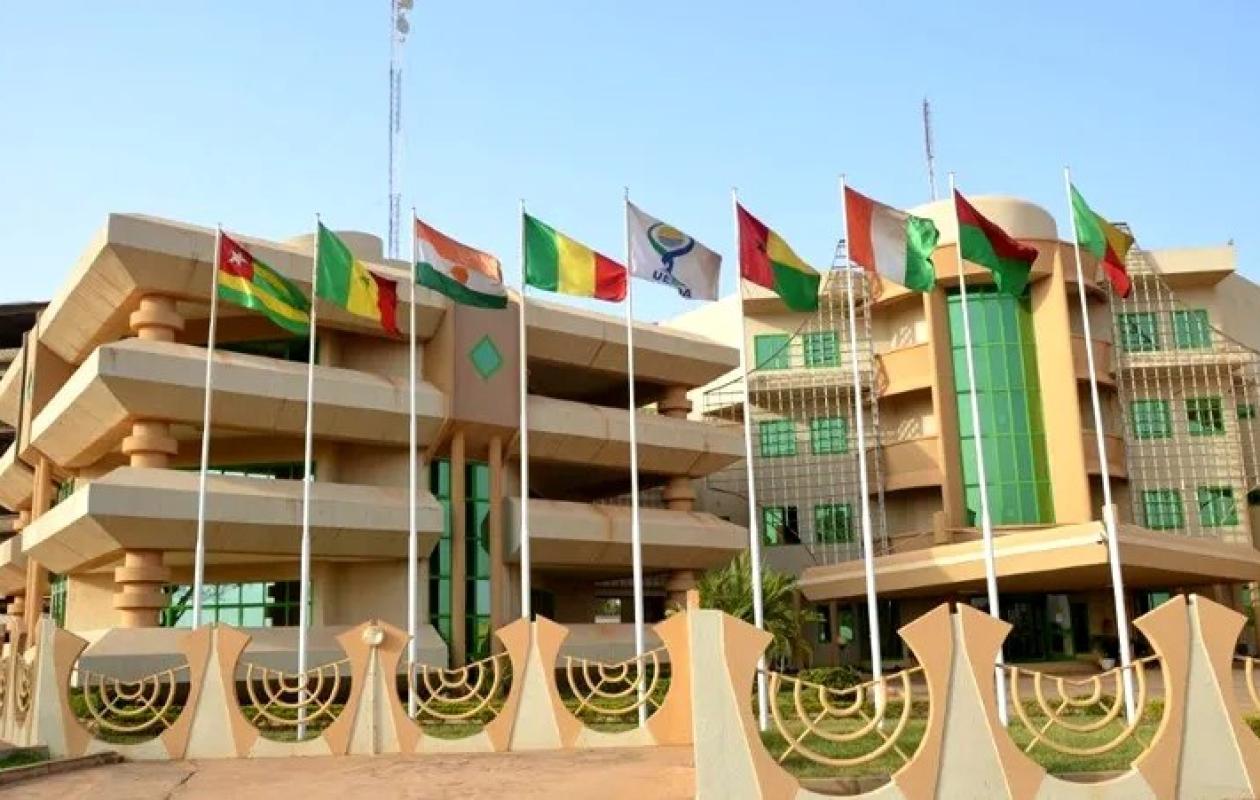
Comprendre le rôle du Parlement dans l’architecture de l’UEMOA
When discussing the West African Economic and Monetary Union (WAEMU), the institutions most often cited are the Central Bank of West African States (BCEAO), which manages the Union's monetary policy, and the West African Development Bank (BOAD), which finances development projects in the eight member states. However, the Union's institutional architecture is not limited to monetary or financial matters. It also includes a regional parliament, the existence of which serves as a reminder that West African integration is not based solely on economic mechanisms, but also on a gradual political process.
This institution is often misunderstood because its role differs significantly from that of national parliaments. It does not vote on state budgets, does not bring down governments, and does not possess the same legislative powers as a national assembly. Its existence, however, is based on an important rationale. As the countries of the Union adopt common rules in economic, fiscal, trade, and financial matters, the need for a space for political representation at the regional level has gradually become apparent.
The Parliament of the West African Economic and Monetary Union (UEMOA) was established in 2003, becoming fully operational a few years later. Its headquarters are located in Bamako, Mali. It brings together representatives from the eight member states of the Union: Benin, Burkina Faso, Côte d'Ivoire, Guinea-Bissau, Mali, Niger, Senegal, and Togo.
Its composition reflects the demographic weight of the different countries. The Parliament currently has 40 community representatives. Côte d'Ivoire has seven seats, Senegal and Mali six seats each, while the other states have representation proportionate to their population. These parliamentarians are chosen from among the national representatives according to the procedures established in each country.
The existence of this assembly reflects a reality often overlooked by the general public. The West African Economic and Monetary Union (UEMOA) now produces a significant volume of regulations that directly influence the region's economic life. Texts relating to competition, taxation, public procurement, financial markets, and certain trade standards are developed at the community level before being implemented in the individual member states.
According to the UEMOA Commission, several hundred community regulations, directives and decisions have been adopted since the creation of the Union in 1994. This growing legal output has progressively reinforced the need for a body capable of participating in the debate on the direction of regional integration.
Parliament's role is primarily through opinions, recommendations, and consultations on texts submitted by other EU institutions. Its powers remain more limited than those of the European Parliament, but its role is part of a comparable dynamic. It helps to introduce a representative dimension into an integration process that might otherwise appear primarily technocratic.
This function takes on particular importance when the topics addressed directly affect the population. Agricultural policies, regional infrastructure programs, the free movement of people, and issues related to youth employment all concern millions of citizens of the Union. By 2025, the WAEMU region was projected to have approximately 150 million inhabitants, compared to fewer than 80 million in the mid-1990s. Regional integration thus has an impact on an increasingly large population.
The presence of a Parliament also strengthens the political legitimacy of the EU institutions. Economic integration often relies on technical decisions made by experts, ministers, or regulatory authorities. This approach facilitates the harmonization of rules, but it can sometimes give the impression that the choices are far removed from citizens. A parliamentary assembly helps create a more visible space for debate on the Union's direction.
This political dimension is all the more important given that the WAEMU is among the most advanced integration areas on the African continent. The eight member states share a common currency, a central bank, a regional financial market, a joint development bank, and several harmonized regulatory frameworks. Few African regional groupings exhibit a comparable level of integration.
Economists regularly emphasize that this institutional framework has helped facilitate economic exchange within the Union. According to data from the WAEMU Commission, intra-community trade represents approximately 15% of the total trade of member countries. This level remains lower than that observed in the European Union, where internal trade exceeds 60% of total trade, but it is still higher than that seen in several other African regional areas.
Parliament is also participating in a broader discussion on the future of West African integration. Debates surrounding tax harmonization, regional infrastructure development, food sovereignty, and the financing of the Union's economies demonstrate that integration is no longer solely about currency or trade. It now involves development choices that will shape the future of generations to come.
This evolution explains why the WAEMU Parliament, despite limited media visibility, occupies a special place in the Union's institutional framework. It does not possess the monetary power of the BCEAO or the financing capacity of the BOAD, but it brings a representative dimension to a regional project whose ambition extends far beyond mere economic cooperation.
Understanding its existence ultimately allows us to better grasp the very nature of the WAEMU. The Union is not simply a monetary area or a common market. It also constitutes an institutional construct that is progressively seeking to articulate economic integration, political cooperation, and citizen representation at the regional level.

















Commentaires (0)
Participer à la Discussion
Règles de la communauté :
💡 Astuce : Utilisez des emojis depuis votre téléphone ou le module emoji ci-dessous. Cliquez sur GIF pour ajouter un GIF animé. Collez un lien X/Twitter, TikTok ou Instagram pour l'afficher automatiquement.