« Sonko, gnoune dagnou khiff. Kharougnou 2050. » : La transformation structurelle à l'épreuve du quotidien
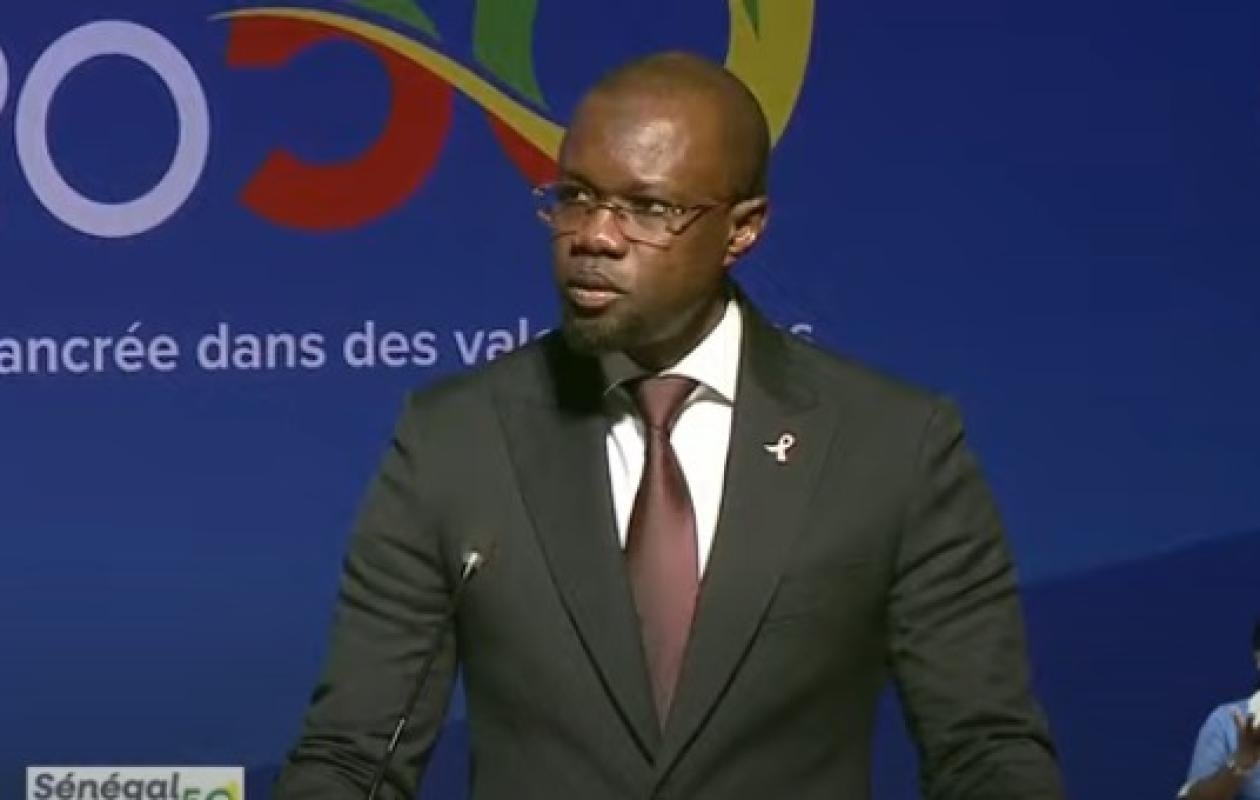
A few months ago, a short video went viral on social media, particularly on Instagram and TikTok. In it, a man utters a phrase that, within seconds, had become a topic of countless conversations: "Sonko, gnoune dagnou khiff. Kharougnou 2050." In other words, "Sonko, we are hungry. We won't wait until 2050." The clip was shared, commented on, and sometimes repeated with a smile. Many Senegalese saw it. And as is often the case with these spontaneous phrases that arise in public debate, this one transcended mere anecdote. It captured a reality that everyone immediately recognizes.
For behind these few words lies an almost universal tension. Citizens live in the immediate present. Economic transformations, on the other hand, advance with the patience of the seasons. Between these two rhythms, there is often a distance that fuels misunderstanding.
In everyday life, time is short. It's measured by the week, by the price of a bag of rice, by the cost of transportation, by the paycheck that arrives, or is delayed. It's a very concrete, almost tangible time. An empty refrigerator doesn't think in terms of decades. Its vision of the future rarely extends beyond the next market.
A country's economy, on the other hand, evolves at a very different pace. The profound changes that truly alter a nation's trajectory are built slowly. They rarely appear as a sudden miracle. They are more like a gradual accumulation of decisions, investments, and lessons learned.
Transforming an economy isn't simply a matter of announcing a program. It requires developing infrastructure, improving education, structuring industrial sectors, encouraging investment, and strengthening public institutions. Each element influences the others and takes time to produce results. Businesses don't invest impulsively. Skills are built over years. Roads, ports, and power plants don't appear overnight.
Economists use the term "structural transformation" to describe this slow movement that gradually shifts the center of gravity of an economy. In many developing countries, a large portion of the population still works in agriculture or in informal activities where incomes remain low. Economic transition involves fostering more productive sectors capable of providing better-paying jobs and generating greater wealth.
Economic history shows that these transitions take time. Rapidly growing East Asian countries took decades to build their industrial base. South Korea, now a technological powerhouse, was still largely rural in the 1960s. The development of its industry, businesses, and technical expertise was gradual, occurring through several cycles of investment and learning.
This is why many states adopt strategies that extend over several decades. Malaysia launched a national vision in the early 1990s to support its economic transformation. Rwanda also adopted a vision extending to 2050 to guide its long-term development. In these cases, the long-term horizon never meant waiting decades before taking action. Rather, it was about charting a clear direction for public policy.
When a country speaks of a target date of 2050, it is not a distant date on a political agenda. It is a trajectory. The first steps must appear quickly, but the complete transformation of an economy is built slowly, like a house whose foundations sometimes take longer to build than the walls.
It is precisely this disconnect that the now-viral phrase captured with astonishing effectiveness. Citizens live in the immediate moment. Their perception of the economy is based on their daily experiences. When incomes stagnate or prices rise, the expectation of change becomes urgent. In this context, mentioning a horizon spanning several decades can give the impression of a future that is too distant.
Economists are well aware of this difficulty. The benefits of an economic reform often appear gradually, while its drawbacks can become apparent very quickly. This asymmetry explains why profound transformations are often politically sensitive. They require a form of collective patience, which is not always the most abundant quality in human societies.
The impatience expressed in the now-viral phrase is therefore perfectly logical. It simply serves as a reminder that citizens judge public policies based on their concrete experience. A national strategy only becomes credible when people begin to perceive improvements, however modest, in their daily lives.
The challenge for a country undergoing economic transformation is therefore to advance on two paths simultaneously. It must address social emergencies while building the foundations for lasting change. If public action focuses solely on the immediate, it risks losing all perspective. If it considers only the long term, it risks becoming detached from the lived reality of the population.
The short phrase that became famous on social media is obviously not a theory of development. But it serves as a rather telling image. It reminds us that economic development always plays out between two different clocks: the clock of daily life and the slower clock of economic transformation.
For a vision projected towards 2050 to be convincing, it must succeed in bridging these two rhythms. The future cannot remain a promise suspended in the air. It must begin to appear in the present, sometimes through modest but visible signs.
In the meantime, the phrase "kharougnou 2050" will likely continue to circulate in discussions, sometimes with a smile. And it must be acknowledged that it possesses a rare quality in economic debate. In a single sentence, it encapsulates a problem that entire libraries of development economics books have been attempting to explain for decades.
Which, in a way, already constitutes a small intellectual achievement.






















Commentaires (11)
Participer à la Discussion
Règles de la communauté :
💡 Astuce : Utilisez des emojis depuis votre téléphone ou le module emoji ci-dessous. Cliquez sur GIF pour ajouter un GIF animé. Collez un lien X/Twitter, TikTok ou Instagram pour l'afficher automatiquement.