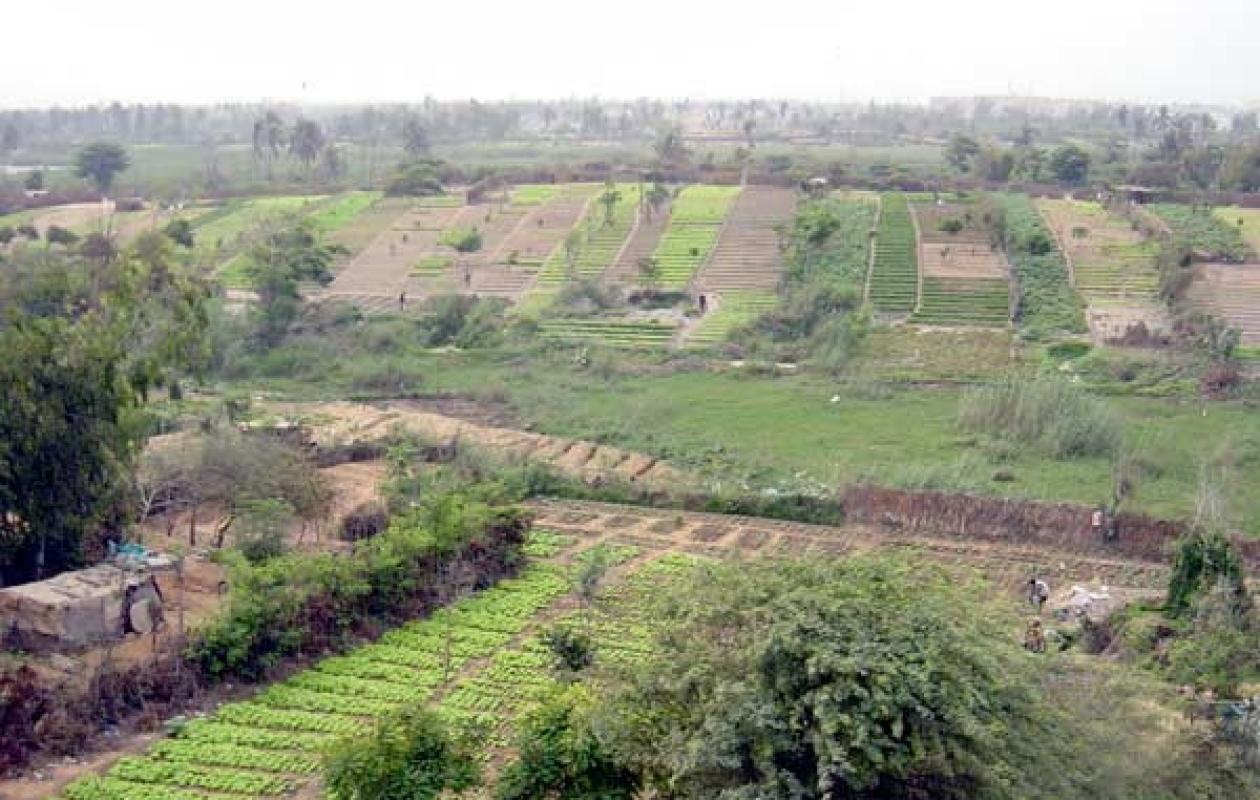
Dégradation de la zone des Niayes : Les Organisations paysannes pointent du doigt l'effet du changement climatique et de l'urbanisation
“We call on all stakeholders to save the Niayes. The time has come to mobilize massively for the preservation of the Niayes.” This cry of distress comes from peasant leaders, women, and youth from peasant organizations and agricultural producers operating in the Niayes area, who are meeting in Thiès for two days for a zonal consultation workshop with grassroots stakeholders as part of the process of developing a peasant strategy for agroecology and organic agriculture.
A meeting under the theme: "For a resilience of the Niayes in the face of the climate emergency: The voice of producers", on the occasion of which the farmers' organizations of the Niayes zone note an alarming evolution of the climate in Senegal marked by: "the profound disruption of crop cycles and the unpredictability of rainfall"; "the marked rise in temperatures which directly impacts the health of livestock and the productivity of crops" and "the scarcity of productive water resources, essential to our life systems".
“This observation shows that climate change is no longer a threat, but an imposed reality,” emphasizes Ibrahima Seck, coordinator of Fenab (National Federation for Organic Agriculture). According to him, the natural heritage constituted by the diversity of strategic natural resources in the Niayes region, including human resources (producers, traders), natural resources (water, horticulture, land), and financial resources (income, decentralized financial systems), is subject to critical hazards such as rising temperatures, wind erosion, flooding, marine pollution, decreased rainfall, bushfires, and land pressure.
Mr. Seck and his colleagues note, after analyzing our resources, "a critical fragility of our production systems: "water stress is increasing with the lowering of the water table and pollution, making access to water increasingly expensive and uncertain for market gardening", "erosion, rampant salinization and the loss of organic fertility are permanently compromising yields", "dependence on imported chemical inputs weakens the resilience of family farms to climate shocks" and "pressure on natural resources fuels conflicts over use".
They consider the Niayes region not just an agricultural area, but a central pillar of the Senegalese economy: it provides approximately 60% of the national horticultural production. The Niayes contribute significantly to the agricultural GDP and provide income for thousands of family farms. They are also convinced that grassroots agroecological production systems are capable of ensuring and maintaining local food security and sovereignty, ecosystem services for rural well-being, and biodiversity conservation.
Farmers' organizations welcome the Senegalese government's commitment to including sustainable agricultural development in its National Development Strategy (SND 2025-2029), particularly in its third strategic axis (Sustainable Planning and Development). They assert that an agroecological transition is the most effective solution for overcoming the environmental challenges facing the agricultural, forestry, livestock, and fisheries sectors. This agroecological transition can and must address the socioeconomic needs of family farms.
Considering the growing climate challenges and the urgent need to move forward on a national agroecological transition strategy, farmers' organizations commit to: "strengthening our contribution to the transformation of family farms towards sustainable, diversified and sustainable production in quantity and quality"; "guaranteeing social mobilization in monitoring the resources of the Niayes"; "ensuring a citizen contribution to the development of the Niayes with an emphasis on youth and women's employment".
The degradation of the Niayes region due to climate change and urbanization directly threatens the country's economic growth and social stability. Therefore, farmers' organizations are calling on the State to: officially declare the Niayes as an area exclusively dedicated to agriculture and horticulture, and to include this provision in land-use planning policies; and to secure land tenure with strict protection to prevent its development from destroying the last natural defenses against climate change.
Also to: regulate the exploitation of its resources, particularly mineral resources; allocate a specific market gardening quota on water; develop a policy for the preservation of micro-ecosystems within the area; consider the context of climate change as an opportunity to capture funds to stimulate the economy by making them accessible.
To the CNCR and other organizations: to monitor and follow the national process of developing the national agroecology transition strategy for better participation of farmers' organizations; to take into account the specificity of the Niayes area in the orientations of the farmers' strategy; to support and strengthen the capacities of farmers' organizations in accessing green climate funds and other dedicated funds; to develop a roadmap on an influence strategy to guarantee the integration of farmers' proposals into the national strategy.





















Commentaires (6)
Le Ministère de l Agriculture et tous les acteurs du secteur agricole doivent porter ce combat dans le cadre de la quête de notre souveraineté alimentaire, mais aussi , et surtout pour la sécurité alimentaire du Sénégal sans oublier notre devoir de penser à la préservation des intérêts de nos chers enfants futures générations.
I really like your blog.. very nice colors
& theme. Did you design this website yourself or did you
hire someone to do it for you? Plz respond as I'm looking to create my own blog
and would like to know where u got this from. thank youhttps://go2delphi.com/?URL=https://my-pet-extra.store/
Unquestionably consider that which you said. Your favorite justification appeared to be on the
net the easiest thing to take into account of. I say to you, I certainly get irked while other folks
consider concerns that they plainly don't recognize about.
You managed to hit the nail upon the highest and outlined out the entire
thing without having side effect , other people could
take a signal. Will likely be again to get more.
Thank youhttps://kmsys.ru/bitrix/rk.php?goto=https://my-pet-extra.store/
Participer à la Discussion
Règles de la communauté :
💡 Astuce : Utilisez des emojis depuis votre téléphone ou le module emoji ci-dessous. Cliquez sur GIF pour ajouter un GIF animé. Collez un lien X/Twitter, TikTok ou Instagram pour l'afficher automatiquement.