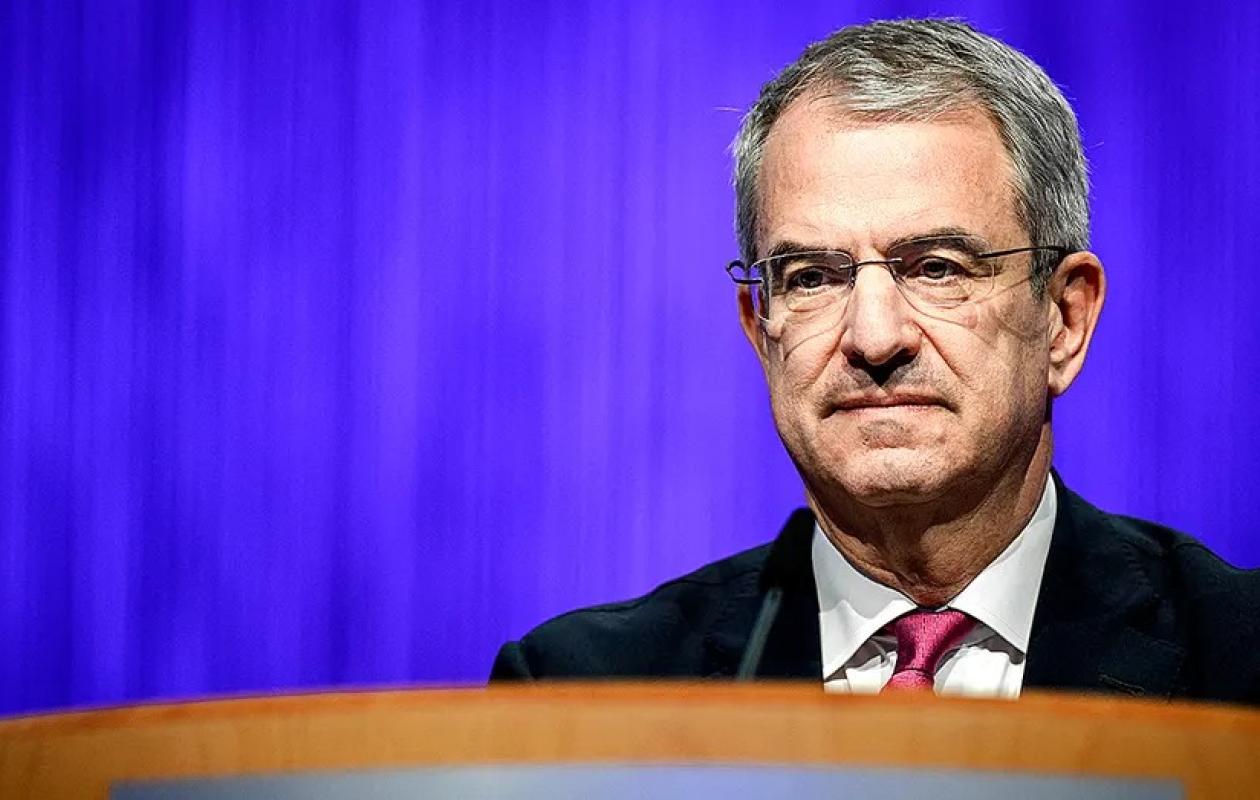
Nestlé licencie son directeur général pour cause de relation amoureuse non déclarée "avec une subordonnée directe"
Swiss food giant Nestlé announced Monday that it had dismissed its CEO, Laurent Freixe, with immediate effect for an "undeclared romantic relationship with a direct subordinate."
"This was a necessary decision. Nestlé's values and good governance form the solid foundations of our company. I thank Laurent for his years of service," said Chairman of the Board Paul Bulcke in a statement.
Frenchman Laurent Freixe was appointed CEO in September 2024 of this group, which owns more than 2,000 brands, including Nespresso coffee pods and KitKat chocolate bars.
The multinational stated that his dismissal followed an investigation that brought to light this "undeclared romantic relationship," which constitutes "a violation of Nestlé's code of professional conduct."
"In accordance with good corporate governance practices, the board of directors has ordered an investigation to be conducted, overseen by Paul Bulcke (...) and Pablo Isla, Lead Independent Director, with the support of independent external legal advisors," the company added.
Hired by Nestlé in France in 1986, Laurent Freixe led the European business during the 2008 financial crisis, a position he held until 2014, then the Latin American division before being promoted to CEO in September 2024.
Replaced by the boss of Nespresso
The press release announces his replacement by Philipp Navratil, head of Nespresso since July 2024, who then joined the board of directors in January 2025.
At the end of July, the Swiss giant maintained its forecasts for 2025 despite macroeconomic uncertainties, between the deflationary environment in China which slowed its sales in the first half and a fragile consumer climate on the American continent.
In the first half, its net profit fell by 10.3% to 5.4 billion euros, with turnover down 1.8%, below forecasts.
It also announced the launch of a strategic review of its vitamin and food supplement activities, specifying that it was progressing in the strategic evaluation of its bottled water, shaken by a scandal in France and Switzerland surrounding micro-filtration processes banned for mineral water.
Nestlé is not the first multinational to make such a decision. In September 2023, Bernard Looney, CEO of BP, one of the "major" oil companies, resigned, accused of having concealed "personal relationships" with several colleagues.
Other top executives before him had been forced to resign for similar reasons. In May 2021, the Wall Street Journal reported that Bill Gates' departure from software giant Microsoft in March 2020 was linked to a relationship deemed "inappropriate" with a female employee in the early 2000s. The Microsoft co-founder, for his part, stated that he was leaving the board of directors to devote himself fully to his foundation.
In November 2019, it was McDonald's that forced its CEO Steve Easterbrook to leave the company, following an affair with an employee, which was admittedly "consensual", but contrary to company rules.
A year later, the fast-food giant decided to sue him to recover tens of millions of dollars in severance pay, accusing him of hiding other affairs, including sexual relationships with three other employees. In December 2021, he agreed to return more than $105 million in severance pay to the company.
In June, Nestlé announced that its board of directors will nominate its vice-chairman, Pablo Isla, for the presidency at the April 2026 general meeting, replacing Paul Bulcke, who has been in office for nearly nine years.


















Commentaires (4)
Participer à la Discussion
Règles de la communauté :
💡 Astuce : Utilisez des emojis depuis votre téléphone ou le module emoji ci-dessous. Cliquez sur GIF pour ajouter un GIF animé. Collez un lien X/Twitter, TikTok ou Instagram pour l'afficher automatiquement.