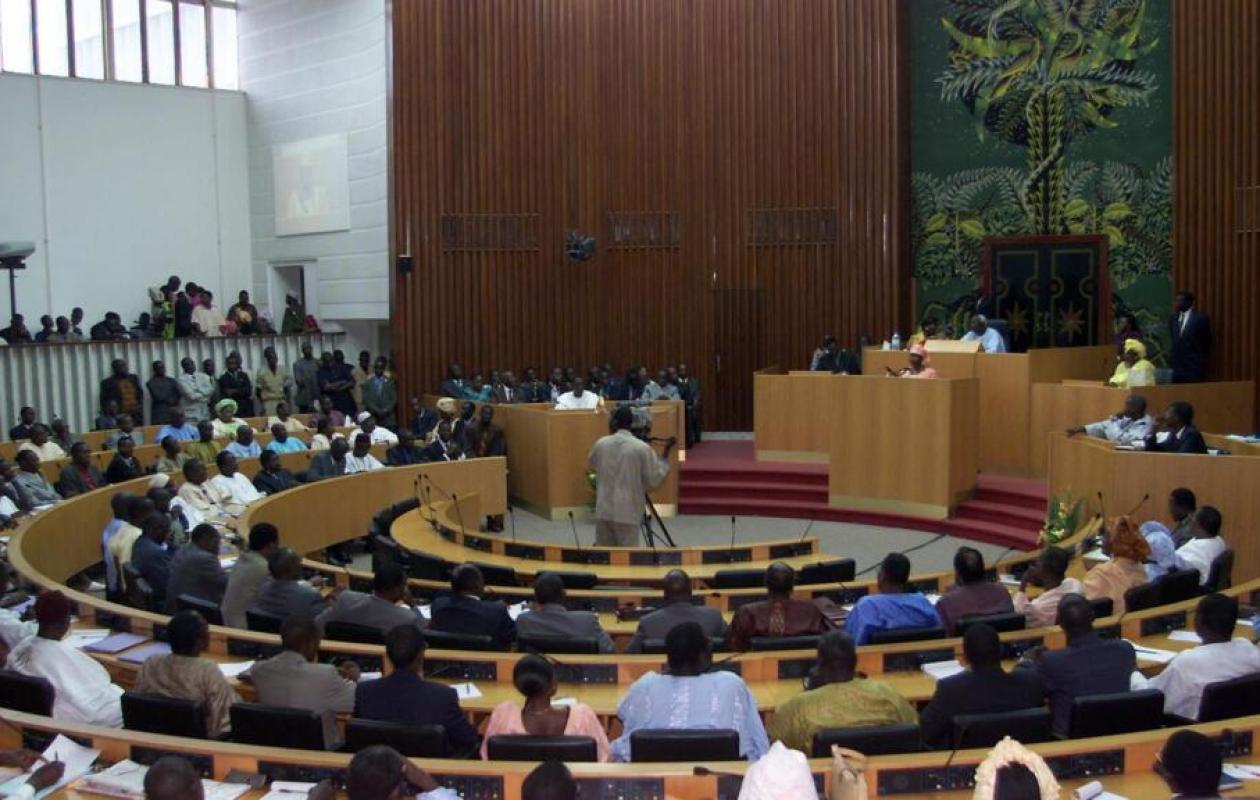
Code pénal : Pourquoi l'article 319 divise les parlementaires entre identité culturelle et droits humains
The examination of draft law No. 05/2026, amending Article 319 of the Penal Code, by the Law Commission of the National Assembly of Senegal was marked by a substantive debate that went far beyond purely legal issues. This is according to the report released to the press on Wednesday at the Assembly, following the plenary session of the draft law. Indeed, at the heart of the discussions between members of parliament and government officials was the balance between Senegal's national sovereignty and respect for its international human rights commitments. It should be noted that the Law Commission heard explanations from the Minister of Justice, Yacine Fall, who defended the reform proposed by the government on March 9, 2026.
Sovereignty as a claimed principle
During the discussions, several commissioners emphasized that "the reform of Article 319 reflects a firm commitment to preserving the cultural, moral, and religious values to which Senegalese society remains attached." In this context, some members of parliament mentioned "the pressure exerted by lobbies or international organizations in debates related to issues of morality and sexuality."
For them, “the sovereignty of a state is not limited to economic, financial, or security matters. It also encompasses the right of a nation to define and defend its own societal choices, based on its history, culture, and values.” Furthermore, this position reflects a widely shared concern in Senegalese public debate, where the issue of homosexuality is regularly presented as a subject touching on cultural identity and the moral foundations of the nation.
Obligations arising from international law
But at the same time, the MPs also raised a major legal issue: "the compatibility of the reform with Senegal's international commitments." The country is indeed a signatory to several international human rights instruments, notably the African Charter on Human and Peoples' Rights, which enshrines fundamental principles such as human dignity, equality before the law, and non-discrimination.
These commitments require the Senegalese state to ensure that its national legislation complies with the international legal standards to which it has subscribed. In this context, some commissioners have asked the government for clarification on how the draft law aligns with these obligations.
A complex balancing exercise
The discussions highlighted the complexity of the debate. On the one hand, there is the political will to respond to the expectations of a significant portion of public opinion by strengthening legislation on so-called "unnatural" acts. On the other hand, there is the need to maintain the consistency of Senegalese law with the international conventions ratified by the country.
For several commissioners, the challenge is therefore to avoid any contradiction between national legislation and the principles enshrined in international legal instruments. They have thus called for a precise clarification of the content of certain provisions of the draft law, particularly those relating to the definition of offenses and the criminalization of glorification.
Beyond the text itself, discussions within the Law Commission reveal a broader debate on the role of international law in national public policy. Caught between asserting sovereignty and respecting international commitments, Senegal faces a delicate balancing act. This debate is expected to continue during the plenary session's examination of the bill, where members of parliament will have to decide on a reform that touches on law, politics, and social values.
















Commentaires (9)
Participer à la Discussion
Règles de la communauté :
💡 Astuce : Utilisez des emojis depuis votre téléphone ou le module emoji ci-dessous. Cliquez sur GIF pour ajouter un GIF animé. Collez un lien X/Twitter, TikTok ou Instagram pour l'afficher automatiquement.