Exercice illégal de la profession de sage-femme : Ce que dit la loi
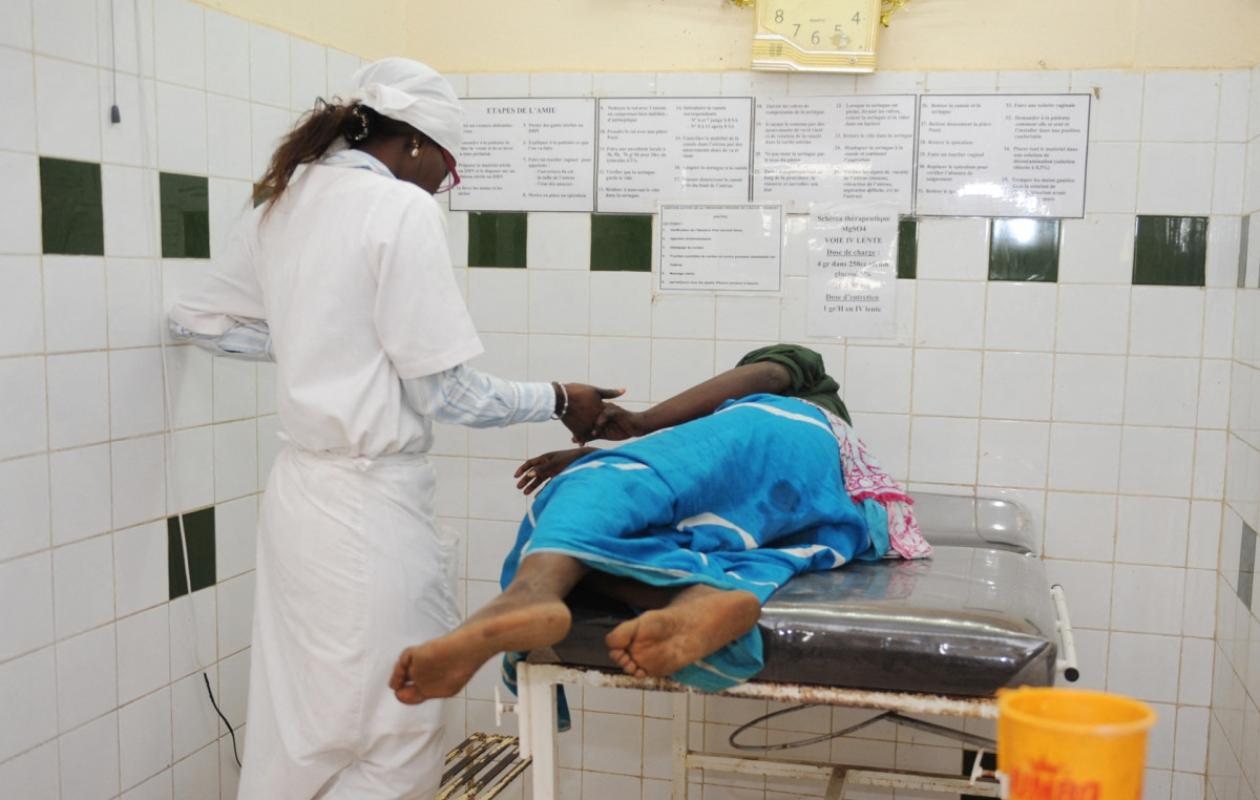
In Senegal, the midwifery profession is at the heart of a major legal contradiction. Essential players in maternal and neonatal health, midwives nevertheless practice under an outdated legal framework, inherited from a law adopted in 1966, now considered ill-suited to the realities of the modern healthcare system. The 1966 law, which still governs the profession, was passed in a context where midwives were considered medical auxiliaries, strictly subordinate to physicians.
Since then, their scope of practice has expanded considerably: pregnancy monitoring, normal deliveries, postnatal care, family planning, and sexual and reproductive health services. But "this evolution of practices has not been accompanied by an update of the legal framework, creating a grey area with serious consequences," according to Bigue Ba Mbodj, president of the National Association of State Midwives of Senegal (ANSFES).
When asked about the legality of practicing the profession, lawyer Aïssatou Kanté Faye, a member of the Association of Senegalese Women Lawyers (AIS), explained that "the current situation exposes midwives to a real legal risk."
According to her, "as long as the 1966 law is not reformed, midwives practice in total legal insecurity. In the current state of the law, the medical acts they perform can be considered illegal, even though they are essential to the health system," she explains.
In the absence of an updated text clearly defining their skills and status, the actions taken by midwives can, from a strictly legal point of view, be considered as an illegal practice of medicine.
Theoretical risks, but very real ones.
A strict interpretation of the law stipulates that anyone performing medical acts without legally recognized authorization is subject to criminal penalties. While such prosecutions are rare in practice, the risk remains, placing midwives in a position of permanent legal vulnerability. "Legally, they could even decide to stop working, because they are practicing illegally," warns the legal expert.
The dead end of the Order of Midwives
The creation of a national Order of Midwives, regularly mentioned as a solution, faces a fundamental obstacle: the lack of clear legal recognition of their professional status. "Without prior reform of the 1966 law, no Order of Midwives can be legally sound. As long as their status remains undefined, the actions they perform cannot be fully recognized by the State," emphasizes Aïssatou Kanté Faye.
Beyond the legal aspect, this situation poses a genuine public health problem. Midwives are one of the cornerstones of the fight against maternal and neonatal mortality, particularly in rural areas where they are sometimes the only healthcare professionals available.
Training, recruiting, and assigning midwives while allowing them to operate in a legal gray area presents a paradox that many stakeholders are now calling to be rectified. For legal experts and healthcare professionals, the solution lies in an urgent reform of the 1966 law, in order to "explicitly recognize the midwifery profession, clearly define their competencies, legally secure the actions they perform, and create the legal foundations for a recognized professional order. Without this reform, midwives will continue to practice in a state of legal insecurity incompatible with the importance of their role in the Senegalese healthcare system."
![[Exclusif] Révision de la Constitution : Le Conseil constitutionnel invalide le vote des députés](https://image.seneweb.com/content/news/2026-28-09//thumb_1260x800_6a4fdec36aa84_Tpa745ZYpD.jpg)























Commentaires (1)
... ET AVEC çA , ON VEUT AVOIR UN FUTUR.......
Participer à la Discussion
Règles de la communauté
💡 Astuce : Utilisez des emojis depuis votre téléphone ou le module emoji ci-dessous. Cliquez sur GIF pour ajouter un GIF animé. Collez un lien X/Twitter, TikTok ou Instagram pour l'afficher automatiquement.
Se connecter
Commentez avec votre profil, votre photo, et soyez averti des réponses.