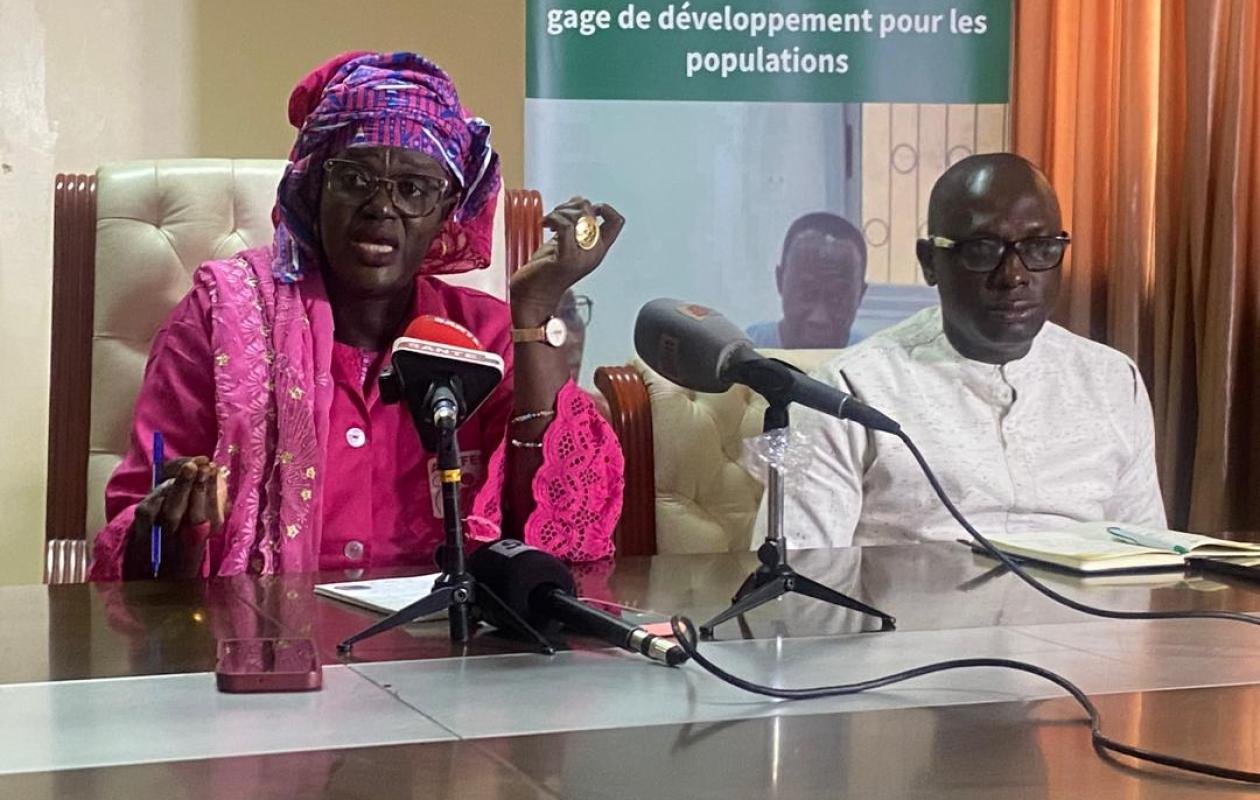
Absence d’un Ordre national des sages-femmes : Une contradiction juridique qui plonge la profession dans « l’illégalité »
In Senegal, the midwifery profession is currently facing a worrying legal impasse. While these professionals are central to maternal and neonatal health, their practice rests on a fragile, even contradictory, legal framework. "The problem lies in the lack of operationalization of the National Order of Midwives, which was created by Law No. 14-2017 of January 20, 2017, passed eight years ago, but still not implemented. This paradoxical situation exposes midwives to constant legal insecurity, while jeopardizing the quality and safety of care provided to women."
A law passed, but never enforced
The law establishing the National Order of Midwives does indeed exist. Yet, "no body has been set up, no national register has been established, no disciplinary mechanism has been put in place," at least according to the president of the Senegalese Association of State Midwives of Senegal.
For Bigué Ba Mbodj, "the direct consequence is that today, an essential profession operates without a regulatory body, unlike doctors, pharmacists or dentists."
According to the state-certified midwife and prominent advocate, this situation is incomprehensible. "Midwives are required to assume heavy medical responsibilities, yet they are denied the necessary legal tools to practice legally and with peace of mind." She was speaking as a guest of the Association of Journalists in Health, Population and Development (Ajspd).
A profession recognized by the WHO, but denied by national law
According to the World Health Organization (WHO) and the International Confederation of Midwives (ICM), midwifery is a medical profession with defined responsibilities, on par with physicians, pharmacists, and dentists. As such, "midwives are legally authorized to provide consultations, make diagnoses, propose and manage treatments, and assume responsibility for their actions. However, Senegalese law continues to rely on Law 66-69 of July 4, 1966, which still classifies midwives as mere auxiliaries under the authority of physicians. This provision is in complete contradiction with the realities on the ground and international standards."
She notes that "this legal inconsistency creates an absurd situation: midwives perform essential medical acts, but without clear legal recognition, which theoretically exposes them to accusations of illegal practice."
Standards without legal value, but very real responsibilities.
Another major paradox: "Midwives work on the basis of standards and protocols developed by the Ministry of Health, particularly in the field of maternal and child health."
However, according to legal experts consulted during advocacy workshops, these standards have no legal standing in court, given the lack of a clear legal framework for the profession. “When a midwife is prosecuted, the standards and protocols do not protect her. They have no legal value,” explained a magistrate at a meeting supported by UNFPA. Thus, midwives are fully responsible for their actions but lack adequate legal protection.
Unregulated training and professional misconduct
The lack of a regulatory body has also paved the way for an uncontrolled proliferation of private training schools, without harmonized curricula, despite the existence of a regional curriculum developed by the West African Health Organization (WAHO), according to Ms. Mbodj. She also highlights the consequences, including "unrecognized diplomas, unequal skills, confusion regarding the use of the title 'midwife,' and massive failure rates in certification exams (pass rate less than 1%)."
Thousands of people are thus working in the field without a clear certification framework, to the detriment of patient safety.
Extreme job insecurity and appalling working conditions
On the ground, the situation is just as alarming. Midwives, particularly in rural areas, often work in extreme conditions: lack of water and electricity, deliveries by the light of telephones, precarious housing, sometimes in consultation rooms, fixed-term contracts linked to projects, prolonged salary delays, impossibility of joining the civil service.
In addition to this job insecurity, there is a high social cost: separation from spouses, family breakdowns, prolonged loneliness, heavy personal sacrifices.
A central role in reducing maternal mortality
Yet the data is clear. According to the WHO and UNFPA, 87 to 90% of the reduction in maternal mortality depends on the work of midwives. "We cannot entrust such a responsibility to a profession that is kept in a legal gray area," insisted Ms. Mbodj. Without midwives, universal health coverage would remain an illusion, particularly in rural areas where they are often the only qualified personnel available.
Faced with this contradiction, midwives are appealing to the highest authorities of the State. They are demanding "the urgent revision of Law 66-69, particularly Article 4, the harmonization of legal texts, the signing of the Code of Ethics, the adoption of the nomenclature of procedures, and the effective establishment of the bodies of the National Order of Midwives. Without these reforms, the profession remains legally invisible, even though it is essential to the survival of thousands of women and newborns."
An institutional illegality with serious consequences
Today, the paradox is glaring: Senegal is improving its maternal health indicators thanks to midwives, while keeping them in a legal gray area. "This isn't a dream we're having. It's an international reality. What's needed is political will," concludes Bigué Ba Mbodj.
As long as this political will is lacking, the state will continue to demand vital work from midwives without granting them the legal status necessary to practice it legally. This contradiction has serious consequences, both for the profession and for the women it cares for.




















Commentaires (1)
En attendant, le constat est que votre corporation est violente envers les malades et vous n'en faite pas votre doléance principale.
Sans nous ,les patients, vous n’êtes riens, alors parlez plutôt et amplement d'un changement de comportement en nous considérant comme des clients de haut rangs et nous traiter comme des être humains en position de vulnérabilité.
Participer à la Discussion
Règles de la communauté :
💡 Astuce : Utilisez des emojis depuis votre téléphone ou le module emoji ci-dessous. Cliquez sur GIF pour ajouter un GIF animé. Collez un lien X/Twitter ou TikTok pour l'afficher automatiquement.