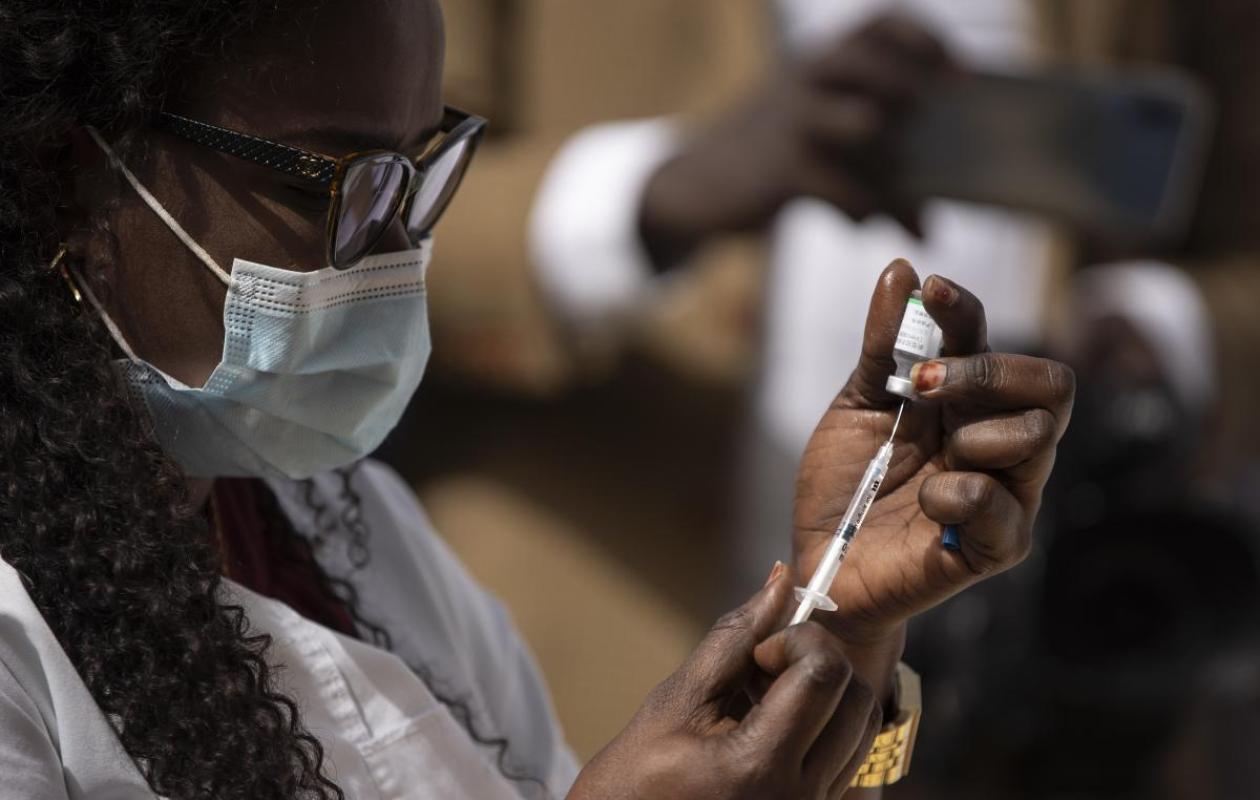
Coup de force technologique : Le Sénégal brise les chaînes de la dépendance vaccinale !
Senegal has reaffirmed its ambition to become the pharmaceutical hub of Africa. Meeting at WHO headquarters, health authorities and international partners formalized the establishment of the Technical Monitoring Committee (TMC) for the messenger RNA technology transfer program on Tuesday, April 14, 2026.
A decisive turning point for the continent's medical autonomy. Indeed, the trauma of the COVID-19 pandemic, during which Africa found itself at the back of the queue for access to doses, is becoming a distant memory. Key health stakeholders have officially launched the operational phase of the messenger RNA (mRNA) technology transfer, a global program initiated by the WHO and the Medicines Patent Pool (MPP).
For the WHO representative in Senegal, Dr. N'da Konan Michel Yao, this project is a direct response to structural inequalities. “Africa can no longer simply wait for donations during times of crisis. This program empowers the continent to defend itself against future pandemics,” he stated. The choice of Senegal as a regional hub is based on a strong legacy, notably that of the Pasteur Institute of Dakar (IPD). The challenge is not just to produce, but to produce to global standards of excellence to guarantee the trust of populations and international markets.
Beyond the vaccine itself, this represents a true technological breakthrough. Dr. Mor Diagne, technical advisor at the Ministry of Health, emphasizes that this advancement aligns with the Senegal 2050 vision. "Thanks to artificial intelligence, we can now model vaccine candidates in record time," he explains. This technological agility paves the way for local solutions to persistent challenges such as malaria, tuberculosis, and even certain types of cancer. However, technology alone is not enough. The Pasteur Institute of Dakar reiterated that innovation must be supported by a robust ecosystem. The success of the locally developed Rift Valley fever vaccine demonstrates that Senegalese expertise is ready.
To turn this trial into a success, Senegal is relying on two pillars: "infrastructure with the MADIBA industrial project, the true arm of this ambition, and regulation, given that the Senegalese Pharmaceutical Regulatory Agency (ARP), already at maturity level 3, ensures that each dose produced is synonymous with safety and efficacy.
The goal: 60% of vaccines produced in Africa by 2040
Senegal is not simply playing its own part. As a leader in West Africa, it bears a continental responsibility. Dr. Yerim Mbagnick Diop reiterated that the African Union's objective is to produce 60% of the continent's needs on African soil by 2040.
By transitioning from consumer to leading producer, Senegal is not simply providing healthcare; it is building a sustainable industry that creates highly skilled jobs and guarantees enhanced national and regional security. "We are no longer in the realm of theory, but in the realm of implementation. The impact on public health will be real and lasting," concluded one of the sector's leaders on the sidelines of the meeting.



![[EXCLUSIF] Affaire Pape Cheikh Diallo : Enseignant, traiteur, vigile... la liste des arrestations s'allonge](https://image.seneweb.com/content/news/2026-16-15//thumb_1260x800_69dfbc6b83024_8exwDmFZNa.jpg)








Commentaires (2)
Participer à la Discussion
Règles de la communauté :
💡 Astuce : Utilisez des emojis depuis votre téléphone ou le module emoji ci-dessous. Cliquez sur GIF pour ajouter un GIF animé. Collez un lien X/Twitter, TikTok ou Instagram pour l'afficher automatiquement.