[En route pour la CAN] De Mandela au destin de Kalusha Bwalya, cinq grandes histoires de la CAN
From the magic of Mandela during the victory of reconciled South Africa in their first participation to the incredible destiny of Kalusha Bwalya, escaping the plane crash of the Zambian team, via the Ivorian goalkeepers, here are five remarkable stories from the Africa Cup.
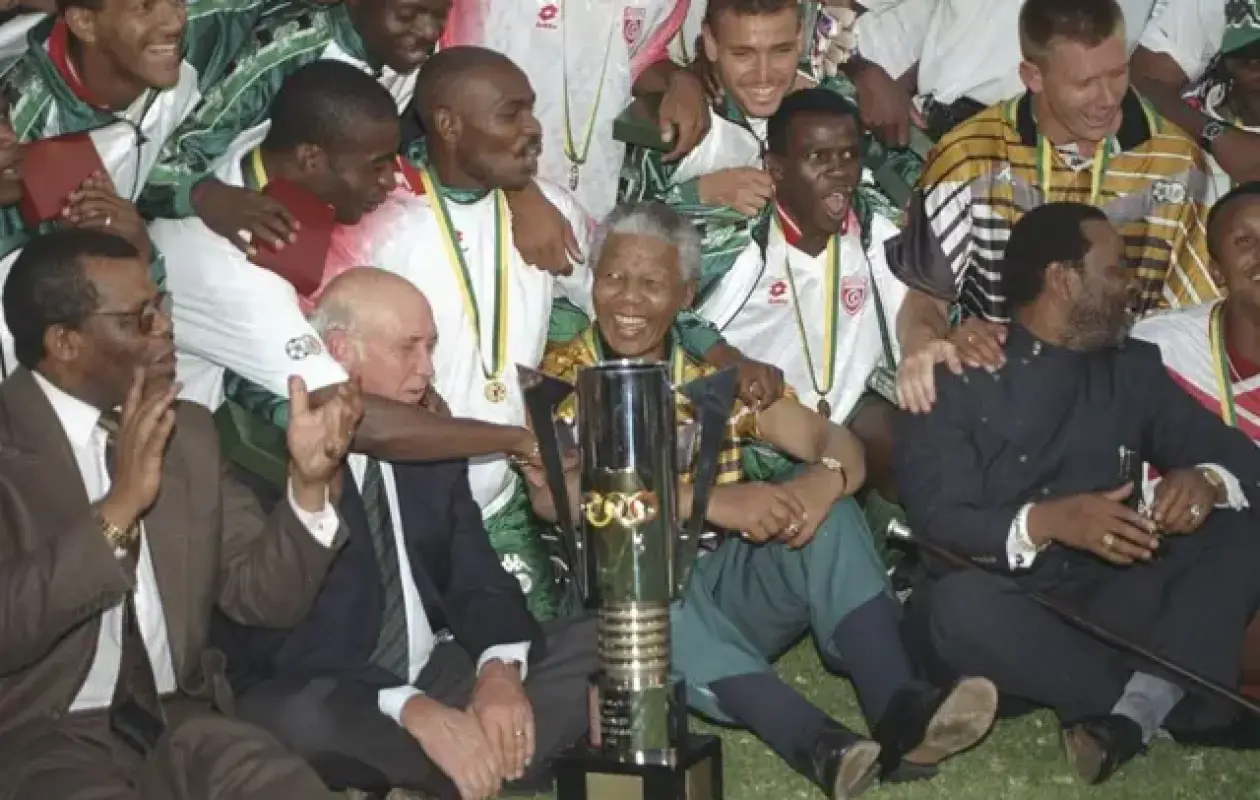
South Africa won the Africa Cup of Nations in its first appearance in 1996, propelled by the charisma of its president, Nelson Mandela. The Rainbow Nation had just rejoined the international community after ending the apartheid regime in 1991.
Bafana Bafana (the Boys) won at home (2-0 in the final against Tunisia) in front of the 1993 Nobel Peace Prize winner. Madiba considered sport "more powerful than governments in breaking racial barriers".
South Africa has come a long way to return to the AFCON. Due to apartheid, it was banned from the first edition in Sudan in 1957 between the four African nations registered with FIFA with Egypt, Sudan and Ethiopia, won by the Pharaohs.
Goalkeepers were the heroes of Ivory Coast's first two victories (1992, 2015) after marathon penalty shootouts. In 1992, the Elephants won their first continental title in the longest shootout in the competition's history, 24 penalties against Ghana (0-0, 11-10 on penalties).
Alain Gouaméné, who had already stopped three Cameroonian shots in the semi-final (0-0, 3-1), including that of his counterpart Joseph-Antoine Bell, stopped Anthony Baffoe's second shot - with eleven players having taken a shot, it was necessary to start again - and gave the title to his team.
The magic was even more powerful in 2015: Copa Barry himself took the winning penalty, again against Ghana's Black Stars (0-0, 9-8 on penalties), just after stopping his counterpart Brimah Razak's penalty, in a crazy 22-penalty shootout where Ghana led 2-0!
What a destiny! Zambia's greatest player of all time, Kalusha Bwalya, has escaped death, nearly won the AFCON, and finally achieved his crowning achievement as president of the federation!
On April 27, 1993, when the national team plane crashed off the coast of Gabon with no survivors, he was not on board, having been granted a special dispensation to play a match with PSV Eindhoven before joining them.
Less than a year later, the Chipolopolos (the Copper Bullets) reached the final of the AFCON with a completely renewed team led by the talisman Bwalya, but lost to Nigeria (2-1).
Having become president of the FAZ in 2008, he finally saw Zambia win the AFCON thanks to the team led by Hervé Renard in 2012. The ultimate twist of fate, this historic victory was achieved in Libreville, one kilometer from the crash site.
Missing a penalty in a final remains every footballer's nightmare, but Nigerian Victor Ikpeba experienced something even worse in 2000: his penalty was successful but disallowed. He, too, failed to see that his shot had bounced behind Cameroonian Alioum Boukar's goal line after hitting the crossbar.
And Nigeria lost at home, in the overflowing crater of the Surulere Stadium, against their great rival Cameroon (2-2, 4-3 on penalties), who had already beaten them twice in the final (1984 and 1988).
During the penalty shootout, the gestures of the former Prince of Monaco (1993-1999) didn't help the Tunisian referees; he put his arms over his head in frustration. Video assistant refereeing (VAR) didn't exist then. When the Super Eagles realized the mistake, the fans and the press erupted in outrage, but the damage was done.
Bloodshed at the Africa Cup of Nations. On January 8, 2010, the bus carrying the Togolese national team was attacked with machine guns by separatists from the Cabinda enclave before the start of the tournament in Angola. Three people were killed: the bus driver, the team's assistant director, and the press officer. Nine others were wounded, including goalkeeper Kodjovi Obilale, who was left permanently disabled.
"This is one of the worst things I've ever been through in my life," said star Emmanuel Adebayor, who carried injured people screaming in pain.
Traumatized, Togo withdrew from the tournament. Initially, the CAF wanted to suspend the Hawks for four years, before ultimately deciding against it.













Commentaires (3)
Participer à la Discussion
Règles de la communauté :
💡 Astuce : Utilisez des emojis depuis votre téléphone ou le module emoji ci-dessous. Cliquez sur GIF pour ajouter un GIF animé. Collez un lien X/Twitter ou TikTok pour l'afficher automatiquement.