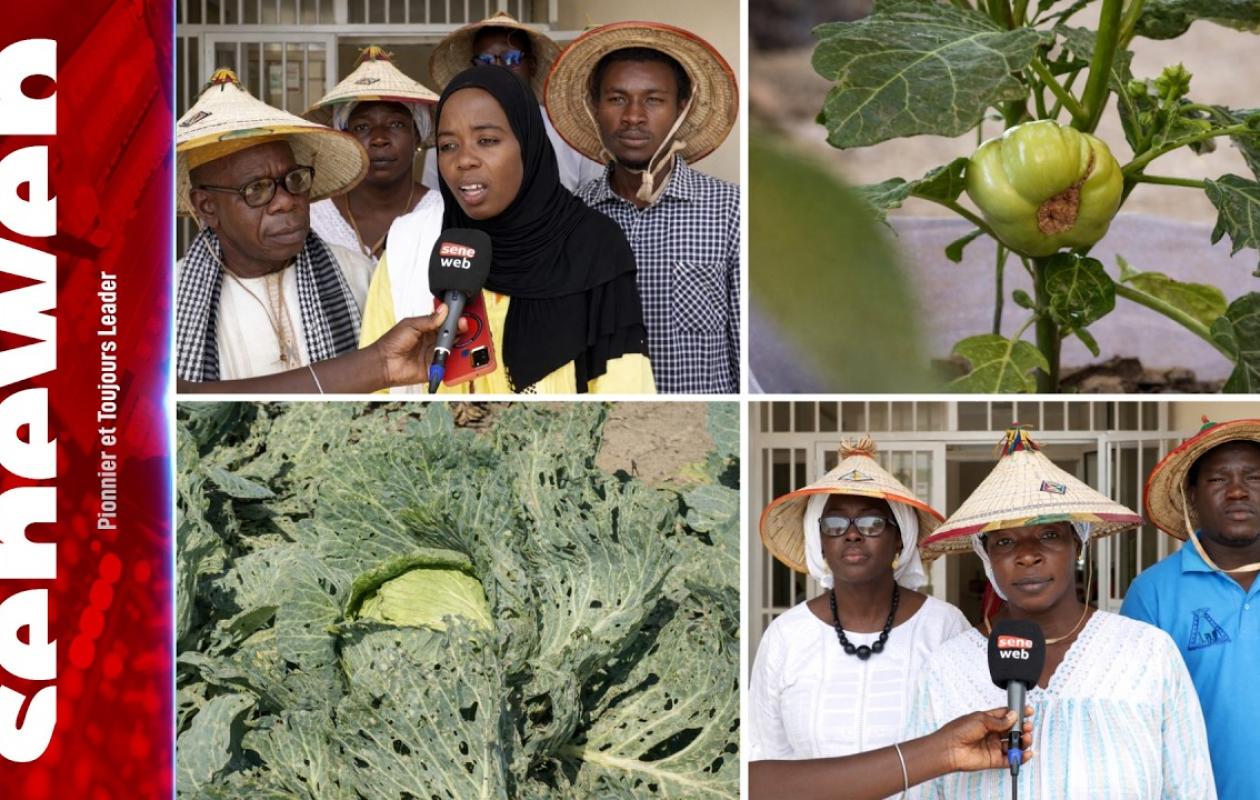
Produits horticoles : les dangers des engrais chimiques et l’alternative du compost
In a context marked by food insecurity, the issue of soil quality and agricultural practices has become crucial in Senegal. Dr. Khady Ndour, working at the Ministry of Agriculture, has warned of the risks associated with the excessive use of chemical fertilizers and advocated for more sustainable solutions such as composting.
According to her, improving agricultural yields is impossible without proper soil fertility management. "If we don't address soil quality, we will always struggle to achieve the yields of selected varieties," she emphasized. She therefore stressed the need to support grassroots communities, particularly in the Niayes region, to develop effective mechanisms for improving horticultural production.
However, she emphasizes that the uncontrolled use of chemical fertilizers poses a threat to both the quality of agricultural products and consumer health. "Excessive use can lead to an accumulation of residues in crops, reducing their shelf life and increasing health risks. Scientific studies have notably linked prolonged exposure to certain chemicals to serious illnesses, such as strokes," warns Dr. Khady Ndour, during a capacity-building workshop on the valorization of organic waste through composting, held this Saturday at the Cedaf in Thiès.
Faced with these challenges, she asserts that composting appears to be a viable and accessible alternative. “Compost (natural fertilizer) isn’t difficult to make. You just need plant debris and natural materials,” explains Dr. Ndour. In addition to being economical, she emphasizes that this method improves soil fertility, promotes biodiversity, and allows for higher-quality, more resilient, and more sustainable agricultural products.
Beyond its environmental benefits, Dr. Ndour states that composting also represents a socio-economic opportunity. It can enable young people and rural communities to develop low-cost income-generating activities, while simultaneously strengthening resilience to climate change.
With this in mind, Dr. Khady Ndour is calling on the authorities to provide greater support to agricultural stakeholders through training and the provision of appropriate equipment. The objective is clear: to promote the self-production of compost and reduce Senegal's dependence on imported chemical fertilizers.
Thus, the transition to sustainable agricultural practices appears not only as an environmental necessity, but also as an essential lever to guarantee food security and the health of populations.






















Commentaires (2)
Participer à la Discussion
Règles de la communauté :
💡 Astuce : Utilisez des emojis depuis votre téléphone ou le module emoji ci-dessous. Cliquez sur GIF pour ajouter un GIF animé. Collez un lien X/Twitter, TikTok ou Instagram pour l'afficher automatiquement.