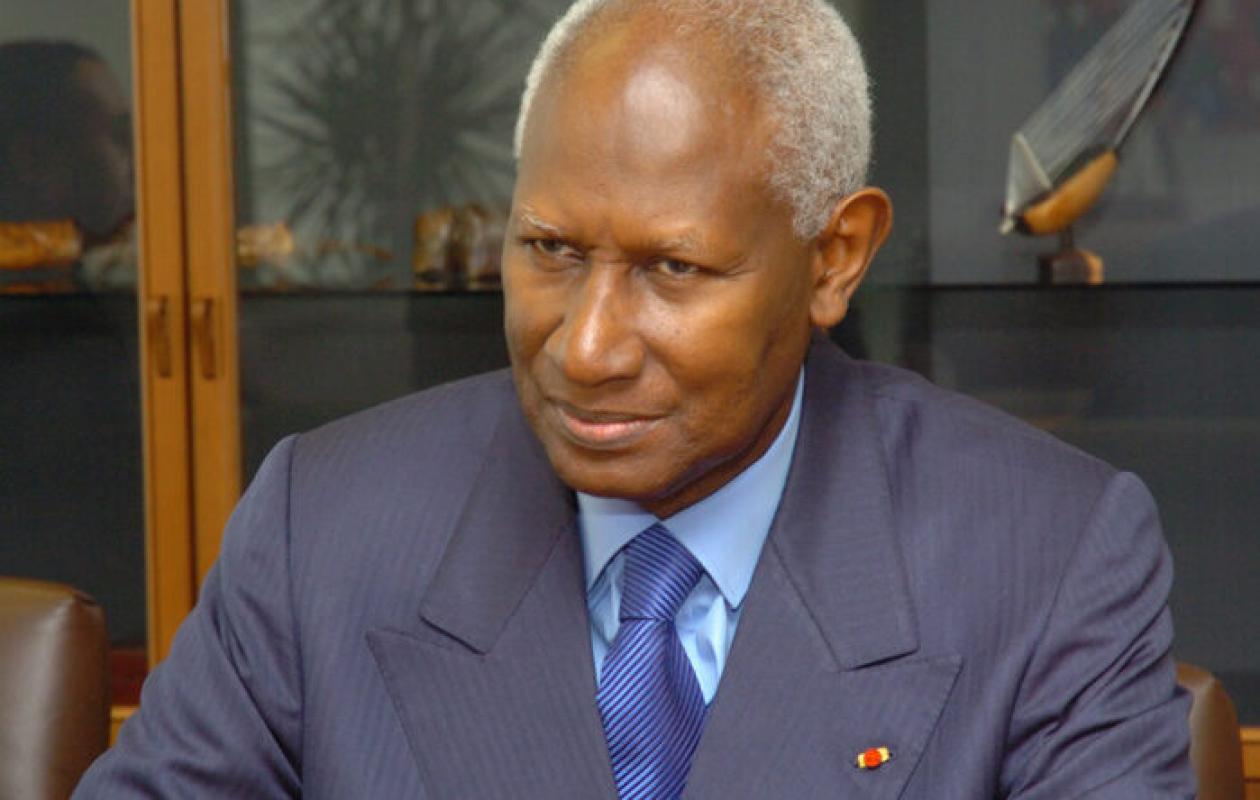
Comptes publics : Abdou Diouf aussi "avait maquillé les chiffres"
The issue of the former regime's hidden debt has been raging in Senegal for months. Macky Sall and his team are accused of having falsified public debt figures and thus of having provided false data, particularly to the IMF. But if we look back at the history of public finances to the 1980s, we find similar practices. This is at least what we can read in the book "The Construction of the State in Senegal," published in 2002 and authored by Donald Cruise O'Brien, Momar-Coumba Diop (who passed away last year), and Mamadou Diouf.
According to them, a public accounts adjustment program was implemented with donors between 1985 and 1992. However, after a few years, the World Bank criticized President Abdou Diouf's government for a lack of commitment, emphasizing form over substance. "This period was marked by a weak internalization of the adjustment constraints, despite relatively significant external financial assistance. Strategies for manipulating and concealing certain economic indicators allowed the PCS (Senegalese central government, editor's note) to access external resources without respecting the commitments that could be most critical for its survival," the book states.
Because of these practices, at the beginning of the 1990s, Senegal appeared in donor reports as "a monstrous and parasitic apparatus." "It was accused of mismanaging public resources, of having an excessively high standard of living, and of being riddled with corruption," the book adds.
Thus, the Diouf regime would experience difficult relations with the World Bank, before adopting, from 1993 onwards, drastic measures such as the reduction of civil servants' salaries, through the famous Sakho-Loum plan named after the Minister of Finance and the one delegated to the Budget.
Today, given the current state of public finances and the strained relationship with the IMF, history seems to be repeating itself. The difference, however, lies in the fact that it is not a Bretton Woods institution accusing the Senegalese government, but rather the Pastef regime, which succeeded the APR. It should be noted, however, that the IMF has largely corroborated these accusations. Another difference is that the Diouf regime had to confront its own misdeeds, whereas here, the Diomaye-Sonko duo is being held accountable for Macky Sall's actions.
For now, no agreement has been reached with the IMF, and the government is refusing to restructure the debt. Let's hope that all this doesn't lead to structural adjustment like in the 1990s. While civil servants' salaries haven't yet been affected (Al Amine Lo had announced this), many benefits are being cut and hard-won rights are being called into question, as illustrated by the closure of the RTS restaurant and the scholarships for master's students, not to mention the restrictions on travel for government employees.







Commentaires (57)
Bien entendu en manipulant leurs moutons qui ont un niveau intellectuel trés bas.
Après une période de sécheresse, un éxode rural massif et des déficits budgétaires importants, le Sénégal a adopté un plan d'ajustement structurel. On oublie qu'un prélèvement obligatoire a été fait sur les salaires des fonctionnaires et des agents du privé.
Malgré cela, la France qui ne voulait plus injecter des capitaux pour combler les déséquilibres des balances des pays de la zone franc, nous a imposé la dévaluation en janvier 1994.
Aucun chiffre n'a été maquillé. La France et le FMI ne l'ont jamais affirmé. Les indicateurs, on les calcule.
En 2000, les comptes publics ont été assainis.
Abdou Diouf n'a jamais vilipendé Senghor
Wade n'a jamais vilipendé Diouf
Et macky n'a jamais vilipendé Wade.
Ils ont géré comme de grand garçon responsables.
Sénégal de Pastef Sarap li rek
- 1 Ce n'est pas après avoir perdu le pouvoir que Wade a dit que Macky ne pourra pas payer les salaires, mais en campagne électorale, entre les deux tours. Phrase déformée, mais il avait dit: "Allez-vous confier ce pays à quelqu'un qui ne pourra même pas payer les salaires d'ici 3 mois ? C'était une question sur la compétence de Macky, et non une question de caisses vides. La preuve Macky a reçu, du travail de Wade, deux grosses rentrées d'argent dès le premier mois de pouvoir. Les 73 milliards de la taxation des appels entrants que la SONATEL avait collecté (par son DG Mbaye, frère du PM) et qui ont été versés à Macky. La presse avait alors appelé Macky Sall "Daw Fass " (le chanceux ). Et la presse avait expliqué que c'est Wade qui a signé le décret décrié qui a produit les 73 milliards, mais que le directeur de la SONATEL avait fait exprès de tergiverser et retarder le renversement de la somme au trésor, a attendu l'arrivée de Macky Sall pour le faire. Je suis très bien placé pour rappeler cela, parce que au moment où cela se passait, quand j'en parlais en commentaire, j'étais systématiquement censuré. Même le fait de rappeler que la DGID avait promis une récolte de 95 milliards alors que Macky parle de prêt d'urgence de 80 milliards de Sarkozy à verser en 3 tranches me valait des censures.
Macky a aussi fait un déplacement au Koweït pour recevoir 140 milliards négociés par Wade pour la VDN (Corniche) dont son ami et frère, Abdou Latif Coulibaly a mis 12 ans à combattre en nous parlant de ratio de milliards par km de route. NB: Il est encore possible de vérifier sur le net, tout ce que je viens de dire.
- 2 - Macky Sall a été un président qui a trouvé des chantiers et acquis de Wade en cours financements disponibles, les a arrêtés soit dit pour audit, et ne les a repris qu'après avoir changer les noms et se les être appropriés. J'ai donné 1000 fois (quoi que souvent censuré) l'exemple des motopompes acquises du Japon en 2011, utilisés en 2011 (particularités: les premiers 1000 m3/H utilisés, et après hivernales toutes réunies par les sapeurs pompiers pour la caserne de Pompiers (Malick Sy). Durant l'hivernage 2012, Macky Sall a donné consignes de ne pas sortir ces motopompes de Wade, jusqu'à ce que les sénégalais les oublient. Et durant cette hivernage 2012, sa maison familiale à Fatick a été inondée jusqu'à évacuation de sa famille. C'est parce que Macky avait les médias que même quand Allah lui inflige des leçons, on le cache au peuple.
Et Thierno Alassane Sall a donné publiquement l'exemple du BRT. Ministre du transport en 2012, il dit avoir trouvé le BRT de Wade totalement ficelé. Il a expliqué comment Macky a charcuté le foncier de la gare terminale (le hub) pour en sortir la surface de sa cité de l'émergence. J'ai souvent répéter que même si un sénégalais donne n'a aucune intelligence, il doit pouvoir se rappeler que c'est Wade qui a construit la garde Beaux Maraîchers pour déplacer la gare Pompiers. Maintenant, est-ce qu'il l'avait fait pour que Macky vienne y ériger une cité de l'émergence pour ses amis marocains, peut-être pour avoir son château au Maroc où fuir à la fin de son pouvoir. Macky a beau avoir la presse pour lui, c'est pas possible de ne pas comprendre.
NB: Et il reste 100 autres exemples. Mais déjà j'ai été long.
Aujourdhui si ces gens du regime TASFEF ne peuvent pas respecter leurs engagements et promesses qui l,ont porte' au Pouvoir, Nguir Yalla bou gnou moutouna delo ndioukal President Abdou Diouf , bougnou yakheu deram. Tiit thi Senegal nak diot na . Kou fa di GORR, vala kou baakh, dinagnou yakheu sa derr vala gnou torakhal la waaye' Yalla baakh na ta guiss na lepeu. wassalam
Pauvre tecnichien, un nullard de plus
DES CHIFFRES FAUSSES,( nom masculin) MERCI D,AVOIR PENSER.....et beaucoup d,autres fautes et de mauvaises constructions de phrase
Quoi que tu puisses dire de mechant de President Diouf, lui au moins est un cadre qui parle un bon Francais
Cet paragraphe m'a terminé 😂. J'en rigole et j'en pleure en même temps 😅😅
Rien ne justifie l'absence de poursuites judiciaires à l'encontre de ces hauts responsables.
SIi President Sall a dit, (comme vous le dites) au Premier Conseil des Ministres que les caisses de l,etat etaient vifes, on pourrait le croire car President Wade apres avoir perdu le pouvoir avait dit fort et haut que le President Macky Sall, ne pourrait plus payer les salaires au de la' de 3 mois. Cependant ce dernier a paye' les salaires pendant 12 ans et a pu terminer tous les chantiers que son mentor Abdoulaye Wade avait demarres', Et Idrissa Seck, lors de ses problemes avec President Wade a raconte' que pendant leur premiere reunion au palais, aptes leur victoire aux presdentiellesle que le President Wade leur avait dit que :"Biss ni ki teye sounouk gnakeu diekh na" Et a' Idrissa Seck de poursuivre, " lors de cette reuinion que Viviane Wade, la premiere dame: pompam la yorone di pompe palais bi naan [ Kheitouk Elizabet Diouf gui laa fi beuga dieule',] , la precedente premiere Dame. Politique daal, li thi Alpha Blondy wakh rek:" Politiki magni" Bilaye baakhoul
Je suis technicien tres tres loin des finances mais je vous que au temps des DIOUF alors que je terminais le lycee DELAFOSSE. j'avais toujours cru que les chiffres que donnait l'etat Senegalais aux bailleurs etaient fausses
Parceque les difficultes reels de vivre etaient differentes des discours de DIOUF toujours tres sucres et des observations des bailleurs toujours en notre faveur comme bon eleve
Merci d'avoir penser comme moi et vous dire j'y crois fermement
Participer à la Discussion
Règles de la communauté
💡 Astuce : Utilisez des emojis depuis votre téléphone ou le module emoji ci-dessous. Cliquez sur GIF pour ajouter un GIF animé. Collez un lien X/Twitter, TikTok ou Instagram pour l'afficher automatiquement.
Se connecter
Commentez avec votre profil, votre photo, et soyez averti des réponses.