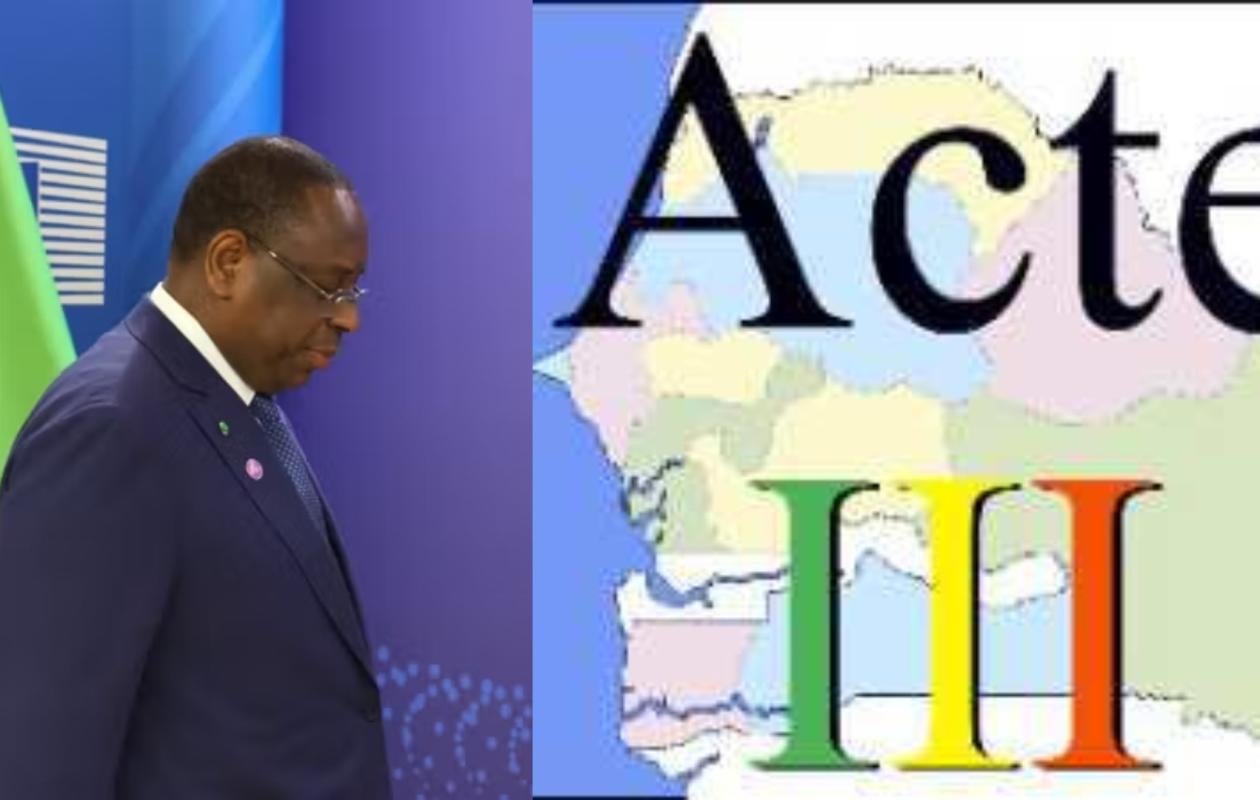
Décentralisation : dix ans après, l’Acte 3 confronté à de lourdes contraintes
More than ten years after its launch, the third phase of decentralization is revealing serious limitations that are hindering the effectiveness of local authorities. This is the assessment made by Alioune Diouf, Secretary General of the Ministry of Urban Planning, Local Authorities and Territorial Development, during a workshop dedicated to evaluating this reform initiated in 2013.
While Act 3 profoundly altered the country's institutional architecture—through full municipalization, the establishment of the department as a territorial authority, and the abolition of the region—these changes did not produce the expected economic transformation. Local authorities are still struggling to establish themselves as genuine drivers of development.
The gap between skills and financial resources
Among the main constraints is the insufficient financial autonomy of municipalities. The transfer of powers by the State was not accompanied by adequate resources, making it difficult for local authorities to effectively carry out their assigned tasks. This mismatch between the transferred responsibilities and the available resources is now one of the main bottlenecks in the process.
In addition to these difficulties, there are problems of territorial viability and coherence. Some communities, facing a lack of human, technical and financial resources, struggle to provide basic services to the population and to carry out structuring local development projects.
Towards an “Act 4” of decentralization?
The current funding scheme, deemed inefficient, exacerbates these weaknesses. According to Alioune Diouf, these constraints are now widely shared by all territorial and institutional stakeholders, highlighting the need for a thorough reform.
In light of this assessment, the authorities intend to learn from the third phase of decentralization in order to address its shortcomings. The ongoing evaluation should pave the way for a new stage, announced as the fourth phase of decentralization. Its aim will be to remove structural constraints, strengthen the capacities of municipalities, and enable them to fully play their role in the economic and social development of their territories.






















Commentaires (3)
Participer à la Discussion
Règles de la communauté
💡 Astuce : Utilisez des emojis depuis votre téléphone ou le module emoji ci-dessous. Cliquez sur GIF pour ajouter un GIF animé. Collez un lien X/Twitter, TikTok ou Instagram pour l'afficher automatiquement.
J’ai toujours pensé que le développement du Sénégal passera inéluctablement par l’essor des collectivités territoriales. A cet effet il est nécessaire de réduire rationnellement le nombre des collectivités territoriales. Je pense aussi que la région érigée en collectivité est mieux que le département. L’Etat devrait se décharger sur les régions pour tous les investissements à caractère social (routes, hôpital régional, lycées etc...).
Se connecter
Commentez avec votre profil, votre photo, et soyez averti des réponses.